

Sacred Cenote Chichén Itzá 2026: Sacrifice, Offerings, Thompson Dredging
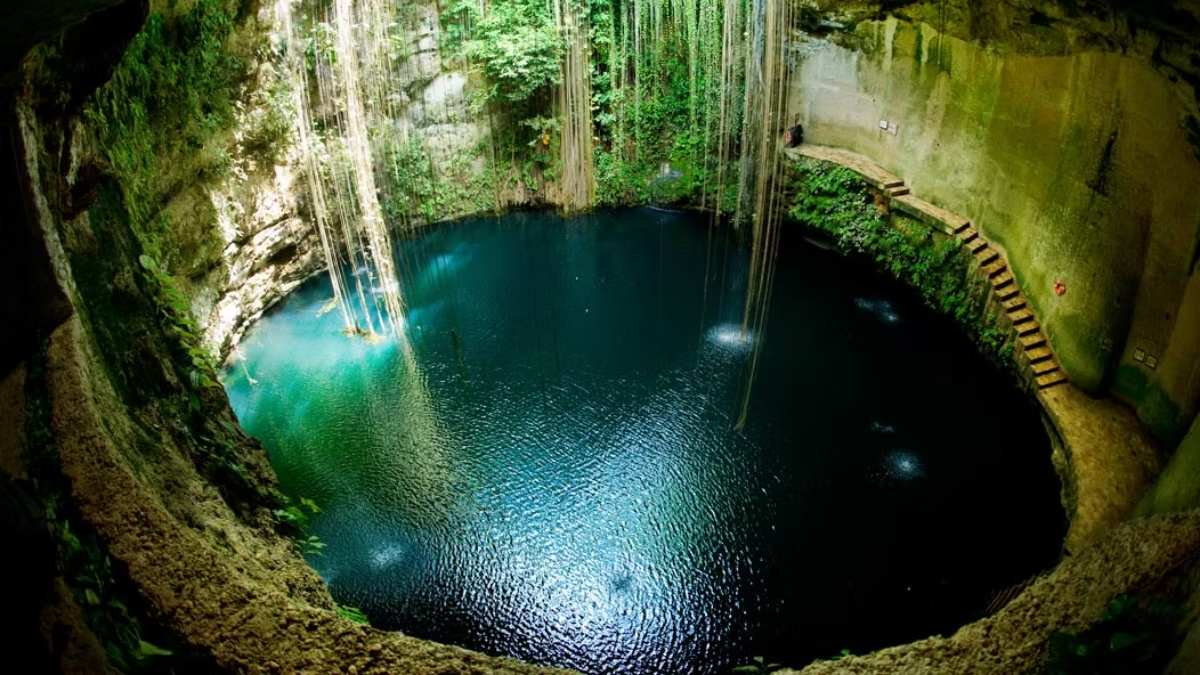
The Sacred Cenote (Spanish: Cenote Sagrado; also known as the Well of Sacrifice or Cenote of Sacrifice) is a natural limestone sinkhole at the northern edge of Chichén Itzá, connected to the main archaeological complex by a 300-meter raised causeway (sacbe). The cenote measures approximately 60 meters in diameter with sheer walls dropping 20 meters to dark water below. According to Maya and post-Conquest Spanish sources, the cenote was used for ritual offerings to Chaac, the Maya rain god — including valuables (jade, gold, copper, turquoise, obsidian, pottery, and rubber figurines) and human sacrifices, particularly during droughts. Between 1904 and 1910, American archaeologist Edward Herbert Thompson dredged the cenote and recovered thousands of artifacts. Later expeditions (1960–61 by the National Geographic Society and CEDAM, 1967–68 by INAH) recovered additional material. In total, over 30,000 artifacts and bones from approximately 200 individuals — many of them children — have been recovered. The name Chichén Itzá itself means “at the mouth of the well of the Itzá” — a direct reference to this cenote’s central ceremonial importance. Visitors can walk to the cenote via the sacbe from El Castillo; swimming in the Sacred Cenote is prohibited.
The Sacred Cenote is the reason Chichén Itzá exists where it does. The entire city was built around this natural well — a portal to the Maya underworld (Xibalba), a source of drinking water in a region with no surface rivers, and a religious site of such power that pilgrims traveled hundreds of kilometers to make offerings here. Standing at the cenote’s edge today, looking down at the dark water 20 meters below, you’re looking at the single most important ceremonial site in all of Chichén Itzá — more sacred, in Maya belief, than any pyramid or temple.
What a cenote actually is
A cenote (pronounced “seh-NOH-tay”) is a natural sinkhole formed when limestone bedrock collapses, exposing groundwater below. The Yucatán Peninsula sits on porous limestone with no surface rivers — all freshwater circulates through an underground network of caves, rivers, and cenotes. The Maya depended on cenotes for drinking water and venerated them as portals to Xibalba (the underworld). The Yucatán has an estimated 6,000–10,000 cenotes, but the Sacred Cenote at Chichén Itzá is the most famous because of its central role in Maya religious ritual and the staggering quantity of artifacts recovered from it. The cenote’s dark water (no direct sunlight reaches the bottom) contributed to its supernatural association — the Maya believed cenotes literally connected the terrestrial world to the realm of the gods.
Why cenotes were sacred
In Maya cosmology, the world was divided into three realms:
- Upper world (sky, heavens, divine beings)
- Middle world (earth, humans, visible reality)
- Lower world (Xibalba — the underworld, realm of gods and ancestors)
Cenotes were understood as openings between the middle world and Xibalba — entry points where the two realms met. Because cenotes produced fresh water (essential for life) and descended into darkness (realm of the gods), they were cosmologically unique among natural features. Offerings thrown into a cenote literally moved from the human realm into the divine realm.
The name: “Chichén Itzá”
The city’s name is a direct reference to the Sacred Cenote. “Chichén Itzá” translates from Yucatec Maya as:
- Chi’ = mouth
- Ch’e’en = well (specifically a water-filled well, implying a cenote)
- Itzá = the name of the Maya group that inhabited the city
Together: “At the mouth of the well of the Itzá” — the entire city’s identity centered on this single cenote.
Physical dimensions and location
| Feature | Detail |
|---|---|
| Diameter | ~60 meters / 200 feet |
| Wall height to water surface | ~20 meters / 65 feet |
| Water depth | Varies; additional 13–20 meters of water below surface |
| Distance from El Castillo | ~300 meters (walkable via sacbe) |
| Direction from site center | North |
| Water level | Below ground — standing water visible from rim |
| Walking surface | Visitor path around the perimeter, with a wood railing |
| Swimming | Prohibited — this is an archaeological site, not a tourist swim cenote |
The sacbe (raised causeway)
A 300-meter raised stone pathway (sacbe) connects the Sacred Cenote to the main Chichén Itzá ceremonial plaza near El Castillo. This wasn’t a casual path — it was a ceremonial route designed for pilgrimage processions. Priests, sacrificial offerings, and prominent visitors would have walked this exact sacbe on their way to the cenote for rituals.
The sacbe is still used today as the tourist path from El Castillo to the cenote. The walk takes approximately 5–7 minutes at a relaxed pace.
The platform at the edge
A small ruined structure sits on the cenote’s rim — thought to be a ritual platform from which priests officiated offerings and from which sacrificial victims were thrown into the water below. The structure is partially collapsed but still identifiable.
What was thrown into the cenote
Dredging expeditions at the Sacred Cenote have recovered approximately 30,000 artifacts and the skeletal remains of approximately 200 individuals. The artifact categories reveal an extraordinary range of valuable materials: jade (the most numerous category — jade was the most precious material in Maya culture, more valued than gold), gold (hammered and cast objects, though gold is not native to the Yucatán and was imported from Central America), copper (from central Mexico, Oaxaca, Guatemala, or Honduras), turquoise (from what is now Arizona and New Mexico), obsidian (from central Mexico), pottery, rubber figures, textiles, wooden objects (preserved by the oxygen-poor water), copal incense, shells, bone, and sacrificed human remains. The presence of materials from across Mesoamerica proves Chichén Itzá’s status as a pilgrimage destination that drew offerings from across a vast trade network. Many artifacts show evidence of intentional damage before being thrown into the cenote — a practice interpreted as “killing” the object so it could accompany the offering into the underworld.
The full artifact inventory
Materials recovered from the Sacred Cenote include:
- Jade ornaments and figurines — carved beads, pendants, plaques, ceremonial masks
- Gold objects — hammered sheets, cast figurines, bells, golden discs with repoussé (embossed) designs
- Copper bells, tools, and ornaments
- Turquoise disc mosaics
- Obsidian blades and ceremonial knives
- Pottery vessels (some intact, most damaged)
- Rubber figurines (preserved by the cenote’s oxygen-poor water — rubber normally decomposes)
- Wooden objects — scepters, idols, tools, jewelry (also preserved by water)
- Textiles — fragments of cloth, rope, and woven materials
- Copal incense
- Shells and bone — both animal bones and intentionally worked bone objects
- Human skeletal remains — approximately 200 individuals
The trade network significance
The geographic origins of materials found in the cenote reveal Chichén Itzá’s trade reach:
- Jade: mined in southeastern Guatemala (Motagua Valley)
- Gold: hammered or cast in lower Central America (Panama, Costa Rica)
- Copper: from central Mexico, Oaxaca, Guatemalan highlands, or Honduras
- Obsidian: from central Mexico highland volcanic regions
- Turquoise: from what is now Arizona and New Mexico (the American Southwest)
- Rubber: from Mesoamerica’s tropical lowlands
For turquoise to reach Chichén Itzá from the American Southwest — then travel onward to be sacrificed to the cenote — reveals an astonishing trade network stretching approximately 3,000 kilometers across Mesoamerica. The Sacred Cenote essentially received a cross-section of ancient America’s most valuable materials.
Human sacrifice: what the evidence shows
The skeletal evidence
Approximately 200 individual skeletons have been recovered from the Sacred Cenote. Forensic and osteological analysis reveals:
- Age distribution: Roughly half of the remains were children or adolescents. Adults were a minority.
- Sex distribution: Both male and female, with some interesting patterns by age group
- Evidence of trauma: Many skeletons show wounds consistent with human sacrifice — cut marks, blunt-force injuries, evidence of impact from falling into water
- Pre-death vs. post-death throwing: Some victims were likely killed before being thrown; others may have been thrown alive
- Temporal span: Remains date from roughly 800 CE through the Spanish Conquest period — over 700 years of ritual use
The 2024 DNA study
A 2024 genetic study of remains from a nearby chultún (human-made cistern) at Chichén Itzá — discovered during a 1967 airport construction project 300 meters northeast of the Sacred Cenote — revealed that all analyzed individuals were male, and approximately half were children aged 3–6. This contradicted earlier assumptions (based partly on Spanish colonial accounts) that most sacrificial victims were young women.
The study used ancient DNA to determine biological sex of remains that couldn’t be determined osteologically, transforming understanding of who was sacrificed. Questions about the Sacred Cenote’s specific demographic patterns remain active research topics.
The Spanish colonial accounts
Friar Diego de Landa, the Spanish Franciscan who witnessed Maya practices in the 16th century, wrote in 1566:
“Into this well they have had, and then had, the custom of throwing men alive as a sacrifice to the gods, in times of drought… They also threw into it a great many other things, like precious stones and things which they prized.”
De Landa’s account — despite his complex legacy of both documenting and destroying Maya knowledge — provided the first written description of Sacred Cenote sacrifice and motivated European archaeological interest for centuries.
The Hunac Ceel legend
According to the Book of Chilam Balam of Chumayel (a colonial-era Maya chronicle), Hunac Ceel, ruler of Mayapan, conquered Chichén Itzá in the 13th century through a dramatic act involving the Sacred Cenote. Maya custom held that individuals thrown into the cenote and surviving were believed to have the power of prophecy. During one ceremony, there were no survivors (all sacrificial victims died). Hunac Ceel then leaped into the Sacred Cenote voluntarily, survived the plunge, was removed from the water, and prophesied his own ascension to political power — a prophecy he then fulfilled through conquest. The story may be partially legendary but reflects genuine Maya beliefs about the cenote’s prophetic and political significance. Whether historically accurate or mythological, the narrative shows that the Sacred Cenote was considered so powerful that throwing oneself into it was a legitimate path to political legitimacy.
Edward Herbert Thompson’s dredging (1904–1910)
The most consequential archaeological investigation of the Sacred Cenote — and one of the most controversial — was conducted by Edward Herbert Thompson, American consul to Yucatán and amateur archaeologist.
Thompson’s background
- 1894: Purchased the Hacienda Chichén (which included the ruins) for approximately $50
- Served as US Consul to Yucatán
- Inspired by Diego de Landa’s account of cenote sacrifice
- Received funding from Stephen Salisbury III of Worcester, Massachusetts
- Spent 30 years exploring Chichén Itzá
The dredging operation
On March 5, 1904, Thompson lowered a steel dredging bucket into the cenote for the first time. The operation continued through 1910. Thompson also personally descended into the cenote wearing early-20th-century diving equipment — dangerous work in dark, silt-laden water.
Key findings:
- First artifact of note: A gold-masked wooden effigy (April 12, 1904)
- Thousands of jade, gold, copper, and other objects
- Human remains from roughly 200 individuals
- Extensive documentation in Thompson’s personal notes
The controversy
Thompson’s work was controversial for two reasons:
1. Methodology. Dredging with steel buckets destroyed archaeological context — artifacts were removed from the positions where they were deposited, losing information about how and when they had been placed in the water.
2. Export of artifacts. Thompson shipped artifacts to the Peabody Museum at Harvard University via the diplomatic pouch (using his consul status to avoid customs scrutiny). This was technically legal at the time but is now considered a form of cultural heritage theft. Mexico has since formally requested return of the artifacts.
Partial repatriation
Some artifacts have been returned to Mexico in goodwill gestures:
- 1959: Peabody Museum returned some objects including golden discs and figurines
- 1976: Additional return including 246 carved jades and a turquoise disc
- Most artifacts remain at Peabody, displayed in their collections
Thompson’s dredging tool is preserved at Chichén Itzá’s visitor center today as a historical exhibit.
Later expeditions
After Thompson:
- 1960–1961: National Geographic Society and CEDAM (Mexican Dive Association) expedition — first use of modern diving equipment and airlift dredging
- 1967–1968: Additional CEDAM expedition
- INAH projects: Various Mexican government archaeological investigations continuing to present
These modern investigations used more careful techniques and recovered additional material, refining understanding of the cenote’s chronology and use patterns.
When to visit
- For photography: Morning light (8:30–10:30 AM) — sun over the cenote rim creates dramatic shadows on the water below
- For minimum crowds: Visit early in your Chichén Itzá tour (before 10:30 AM) — the cenote is usually the third or fourth stop on most tours
- For context: After visiting El Castillo and the Great Ball Court — appreciate the 300-meter sacbe walk as Maya pilgrims did
- Peak congestion: 11:30 AM – 2:00 PM
Most guided tours allocate 10–15 minutes at the Sacred Cenote. Serious visitors should plan 20–30 minutes to walk the perimeter and appreciate the scale.
What you’ll actually see
Visiting the Sacred Cenote today, you experience:
- The 300-meter walk from El Castillo along the sacbe — shaded by trees
- Arrival at the cenote rim — a sudden dramatic view of the sinkhole
- A perimeter path allowing 360-degree viewing
- The platform ruin on one edge (likely sacrificial platform)
- The dark water 20 meters below — sometimes visible, sometimes shadowed
- Informational signs in Spanish and English
- The dredging equipment display (back at the visitor center)
You cannot:
- Swim in the Sacred Cenote (it’s an archaeological site)
- Descend to the water level
- Access the platform ruin
- Take water samples or touch anything
For a cenote swimming experience, tours typically visit Cenote Ik Kil (3 km from Chichén Itzá) or similar commercial cenotes after the Chichén Itzá visit.
Quick reference
| Detail | Value |
|---|---|
| Structure name | Sacred Cenote (Cenote Sagrado / Well of Sacrifice) |
| Diameter | ~60 m / 200 ft |
| Depth to water surface | ~20 m / 65 ft |
| Distance from El Castillo | 300 m (walkable via sacbe) |
| Direction from main plaza | North |
| Artifacts recovered | ~30,000+ |
| Human remains recovered | ~200 individuals |
| First dredged | 1904 (Edward Herbert Thompson) |
| Last major expedition | Late 1960s |
| Swimming | Prohibited |
| Typical visit time | 10–15 min (recommend 20–30) |
| Religious significance | Portal to Xibalba (Maya underworld) |
| Deity associated | Chaac (rain god) |
Frequently Asked Questions
Can you swim in the Sacred Cenote at Chichén Itzá?
No — swimming is prohibited. The Sacred Cenote is a protected archaeological site, not a tourist swimming cenote. Visitors can walk around the perimeter and view the water from above, but cannot descend to the water level or enter the cenote. For cenote swimming, tours typically include a separate stop at a nearby commercial cenote like Cenote Ik Kil (3 km away).
Why is the Sacred Cenote called the “Well of Sacrifice”?
Because human sacrifices were thrown into it as offerings to the rain god Chaac. Archaeological evidence — approximately 200 human skeletons recovered from the cenote, many showing signs of ritual trauma — confirms the colonial Spanish accounts of sacrifice. The practice intensified during droughts, when the Maya believed they needed extraordinary offerings to restore rainfall.
How deep is the Sacred Cenote?
The cenote walls drop approximately 20 meters (65 feet) from the rim to the water surface. Below the water surface, the depth extends an additional 13–20 meters (the exact figure varies with water level). Total depth from rim to floor of the cenote: approximately 33–40 meters. The water is dark because of the depth and shadows from the sinkhole walls.
Who was sacrificed in the Sacred Cenote?
Analysis of skeletal remains shows a mix of ages and both sexes. Approximately half the remains were children or adolescents. A 2024 DNA study of remains from a nearby Chichén Itzá chultún (cistern) — not the cenote itself — revealed that all analyzed individuals were male, mostly aged 3–6. This contradicts earlier assumptions that sacrificial victims were primarily young women; the Sacred Cenote’s specific demographic patterns remain actively researched.
What did Edward Thompson find in the cenote?
Between 1904 and 1910, Thompson recovered thousands of artifacts including gold, jade, copper, turquoise, obsidian, pottery, rubber figurines, wooden objects, textiles, and human remains. He shipped most artifacts to the Peabody Museum at Harvard University via diplomatic pouch — a controversial move that Mexico has since partially addressed through repatriations in 1959 and 1976. Thompson’s initial investment in purchasing the Chichén Itzá hacienda was approximately $50; his subsequent finds reshaped the archaeology of Mesoamerica.
How many artifacts have been recovered from the Sacred Cenote?
Approximately 30,000+ artifacts across all expeditions — Thompson 1904–1910, National Geographic/CEDAM 1960–61, CEDAM 1967–68, and various INAH investigations. This is one of the largest single-site archaeological finds in Mesoamerica.
What is the sacbe leading to the cenote?
A 300-meter raised stone causeway connecting the Sacred Cenote to the main Chichén Itzá ceremonial plaza near El Castillo. “Sacbe” (plural: sacbeob) means “white road” in Maya — these raised stone paths connected Maya cities and ceremonial sites. The sacbe to the Sacred Cenote served as a pilgrimage route for priests, sacrificial offerings, and ceremonial processions. Today it’s the tourist path from El Castillo to the cenote.
Why were the Maya throwing gold into the cenote when gold isn’t native to the Yucatán?
The gold at Chichén Itzá was imported from Panama and Costa Rica — hundreds of kilometers away. Its presence at the cenote proves that Chichén Itzá was a pilgrimage destination drawing offerings from across Mesoamerica. Pilgrims would bring valuable materials from their home regions and sacrifice them to the cenote, reinforcing Chichén Itzá’s status as a religious center with political-economic reach far beyond its local territory.
Is the Sacred Cenote still used for any ceremonies today?
Not as an active sacrifice site. Modern Maya communities maintain spiritual connections to cenotes and may perform ceremonial observances, but the Sacred Cenote at Chichén Itzá is primarily an archaeological site protected by INAH (the Mexican archaeology authority). Contemporary Maya religious practices continue at other locations and cenotes.
How old is the Sacred Cenote as a ceremonial site?
Cenotes themselves are geological formations millions of years old. As a ceremonial site, the Sacred Cenote was used from approximately 800 CE through the Spanish Conquest (1500s) — over 700 years of documented ritual activity. It may have been used earlier, with the most intense activity during Chichén Itzá’s 900–1200 CE peak.
Why was the Sacred Cenote chosen instead of other cenotes?
The Yucatán has thousands of cenotes, but the Sacred Cenote at Chichén Itzá was singled out because it was at the political and religious center of a major Maya city. Its location — directly accessible from Chichén Itzá’s ceremonial plaza via the sacbe — made it logistically central for major ceremonies. Its physical scale (60-meter diameter) was also unusual; many cenotes are smaller and less dramatic.
What is Chaac, the god the cenote was dedicated to?
Chaac (sometimes spelled Chac or Chaak) is the Maya rain god, the most important deity in the Yucatán where agriculture depended entirely on rainfall. Chaac is typically depicted with a long curved nose, square jaw, and stretched earlobes. Rain god masks appear throughout Yucatán archaeological sites including Chichén Itzá, Uxmal, and Mayapan. Sacrifices to Chaac during droughts were an attempt to restore rainfall; the Sacred Cenote — a pool of water directly accessible to the rain god’s underworld realm — was the most direct way to make such offerings.
Where did Thompson’s artifacts end up?
Most were shipped to the Peabody Museum at Harvard University via diplomatic pouch (using Thompson’s U.S. Consul status). They remain displayed there today. Some artifacts were returned to Mexico as goodwill gestures — 1959 (various objects) and 1976 (246 carved jades, a turquoise disc, gold figurines). The majority of Thompson’s finds, however, are still in the United States.
How did the cenote form?
The Yucatán Peninsula is a limestone plateau — porous rock formed from ancient coral reefs. Over millions of years, rainwater slowly dissolves the limestone, creating underground cave systems. When a cave ceiling collapses, it exposes the groundwater below — creating a cenote. The Sacred Cenote formed this way, probably during the Pleistocene period (over 10,000 years ago). The Yucatán has thousands of cenotes — all connected through an immense underground river network that feeds the entire peninsula’s freshwater supply.
Where is the Sacred Cenote in relation to the main site?
300 meters north of El Castillo, accessible via the sacbe (raised stone causeway). It’s the northernmost point on most Chichén Itzá tours. The walk takes 5–7 minutes from the central plaza.
