

Temple of the Warriors Chichén Itzá 2026: Chac Mool + 1000 Columns
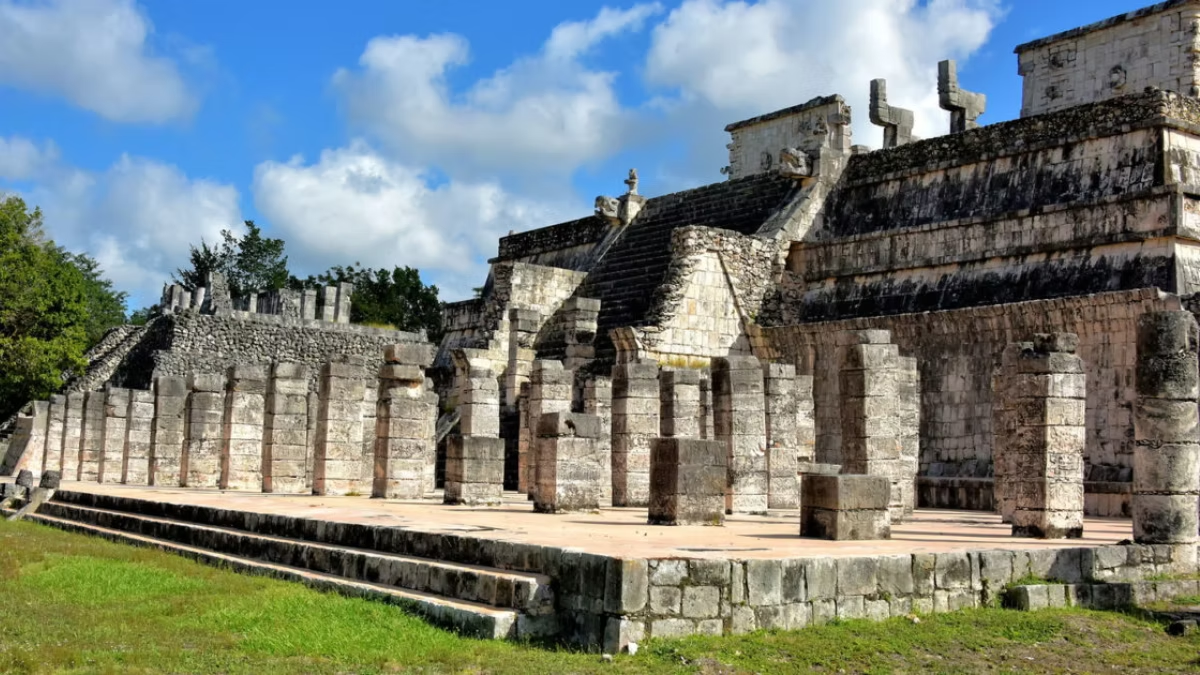
The Temple of the Warriors (Spanish: Templo de los Guerreros) is a large stepped pyramid complex at Chichén Itzá, located approximately 50 meters east of El Castillo. The pyramid rises approximately 12 meters (40 feet) high on a square base of 40 meters (131 feet) per side, topped by a ceremonial temple. It gets its name from the 200 carved columns representing Toltec warriors that surround and extend from its base to the south and west. At the summit sits one of Chichén Itzá’s most iconic sculptures — a reclining Chac Mool statue holding an offering plate on its stomach, flanked by two massive feathered-serpent columns representing Kukulkán. The temple’s architecture is strikingly similar to Pyramid B at the Toltec capital of Tula (over 1,000 kilometers north in central Mexico), revealing direct cultural contact between the two civilizations. Inside, an earlier pyramid (Temple of the Chac Mool) is encased within the current structure — a common Maya practice of building new pyramids over older ones. The temple was restored between 1925 and 1928 by the Carnegie Institution of Washington under archaeologist Earl H. Morris. Visitors cannot climb the pyramid (banned since 2006) but can view it from the adjacent Group of a Thousand Columns plaza.
The Temple of the Warriors is where Chichén Itzá’s unique cultural fusion becomes unmistakable. If El Castillo is the pyramid that everyone recognizes, the Temple of the Warriors is the pyramid that tells the real story — how the Maya of the Yucatán merged their architectural and religious traditions with Toltec influences from central Mexico to create something genuinely new. Standing at its base, looking up at the Chac Mool and the feathered-serpent columns, you’re looking at a monument that marks one of the pivotal moments in Mesoamerican history.
The Architecture: What You’re Looking At
The Temple of the Warriors is technically a “temple-pyramid complex” — a large square pyramid topped by a ceremonial temple structure, integrated into a broader plaza surrounded by carved columns. Key architectural elements:
| Feature | Detail |
|---|---|
| Pyramid height | ~12 meters / 40 feet |
| Base dimensions | 40m × 40m / 131ft × 131ft (square) |
| Number of platforms | 4 stepped platforms |
| Flanking columns | 200 total (round and square) |
| Top temple size | 21m × 21m / 69ft × 69ft (square) |
| Chac Mool location | Top of pyramid, in front of temple entrance |
| Feathered serpent columns | Two massive rattlesnake-tail columns at temple entrance |
| Construction period | ~900–1100 CE (Toltec influence period) |
The Staircase and Ramps
The pyramid is approached by a broad western stairway with a plain stepped ramp on either side. Each ramp has carved standard-bearers (figures that would once have held ceremonial flags). At the base of the stairway, carvings depict feathered serpents with protruding heads — connecting this temple stylistically to El Castillo, where similar serpent sculptures mark the base of the northern staircase.
The Top Temple and Chac Mool
At the summit, a square temple structure (21m × 21m) houses what makes the Temple of the Warriors iconic:
- Chac Mool statue — a reclining figure with knees drawn up, head turned to the side, and a plate/bowl on its stomach to receive offerings
- Two massive feathered-serpent columns — rattlesnake tails rising to support the temple’s lintel (doorway beam), heads down at ground level with open mouths
- Eight stone pilasters inside the inner sanctuary
- An altar supported by small carved warrior figures known as “atlantes”
- Wall murals (largely faded) depicting Toltec military scenes
The Chac Mool: Chichén Itzá’s Most Iconic Statue
The Chac Mool is a distinctive type of Mesoamerican sculpture — a reclining figure on its back with knees bent upward, head turned 90 degrees to one side, and a flat receptacle (plate or bowl) resting on its stomach designed to hold offerings. The name “Chac Mool” means “great red jaguar” in Yucatec Maya, though the figure itself is not jaguar-shaped. The first Chac Mool ever discovered was excavated at Chichén Itzá by Augustus Le Plongeon in 1875, who called it “Chaacmol” (later renamed). Over a dozen Chac Mool sculptures have been found at Chichén Itzá, including the famous one at the top of the Temple of the Warriors. The figures are strongly associated with Toltec culture — similar statues have been found at the Toltec capital Tula and other post-Classic Mesoamerican sites. Interpretations vary: some archaeologists view Chac Mool as an intermediary between the gods and humans (offerings placed on the stomach would be received by the deities); others interpret the plate as a receptacle for the hearts of sacrificial victims during the human sacrifice rituals that intensified at Chichén Itzá during the Toltec period.
What the Chac Mool Represents
Academic interpretations of the figure’s meaning:
- Intermediary figure — transmitting offerings between worshippers and gods
- Fallen warrior — a defeated combatant in a posture of submission
- Rain deity — the “Chaac” connection (though the name was applied later)
- Sacrificial altar — receptacle for hearts during human sacrifice
- Pilgrim’s offering place — general-purpose altar for incense and symbolic gifts
The most commonly accepted modern view combines interpretations: the Chac Mool served as an altar for offerings, which could include anything from incense and food to — in the most dramatic ceremonies — extracted hearts from sacrificial victims.
The Chac Mool at the Temple of the Warriors Specifically
This particular Chac Mool, at the top of the Temple of the Warriors, has become the definitive image of the figure. When visitors photograph “a Chac Mool,” it’s usually this one. The statue:
- Holds a flat circular plate on its stomach (used for offerings)
- Faces forward over the plaza (looking west toward El Castillo)
- Is carved from pale limestone
- Was found decapitated when first photographed by explorer Alfred Maudslay in the 1880s — the head has since been restored
The 200 Carved Warrior Columns
Surrounding the pyramid’s base (primarily on the south and west sides) are approximately 200 columns — a mix of round and square shapes. All square columns are carved in bas-relief with images of Toltec warriors in full ceremonial dress.
What the Warrior Carvings Show
Individual columns depict:
- Toltec warriors in distinctive military attire
- Eagles and jaguars (important Toltec military orders) devouring human hearts
- The god Tlalchitonatiuh (a Toltec deity associated with the rising sun)
- Shield designs and weapons
- Ceremonial regalia
In their original state, the columns were cemented together in sections, plastered smooth, and painted in brilliant colors — reds, blues, yellows, and greens. Over the centuries, the paint and plaster have worn away, leaving the limestone carvings visible but monochromatic.
Why 200 Columns?
The columns served two purposes:
- Structural — they originally supported a wood-beam roof over the plaza, creating a covered ceremonial space
- Iconographic — each column represented a specific warrior or warrior concept, turning the plaza into a permanent military procession
Today the roof is gone (the wood rotted centuries ago), leaving the columns as a forest of freestanding stone warriors — one of the most distinctive sights at Chichén Itzá.
The Toltec Connection
The Temple of the Warriors bears a striking resemblance to Pyramid B at Tula, the Toltec capital approximately 1,000 kilometers (620 miles) north in central Mexico’s Hidalgo state. Both structures share the same design concept: a stepped pyramid topped by a temple, a Chac Mool at the entrance, columns carved with warrior figures, feathered-serpent architectural elements, and eagle/jaguar iconography representing military orders. Archaeologists consider this architectural parallel one of the strongest pieces of evidence for direct cultural contact between the Toltec of central Mexico and the Maya of the Yucatán during Chichén Itzá’s post-Classic period (approximately 900–1200 CE). The nature of this contact is debated: some scholars argue the Toltec migrated to Chichén Itzá and physically built these structures; others argue local Maya adopted Toltec architectural styles through trade and cultural exchange. Recent archaeological consensus favors a middle position: complex cultural interaction with bidirectional influence, as both cultures shared iconography and ritual practice during this period.
Signs of Toltec Influence at Chichén Itzá
Beyond the Temple of the Warriors itself, Toltec influence appears throughout post-Classic Chichén Itzá:
- Feathered-serpent columns (found in multiple structures)
- Chac Mool sculptures (distinctly Toltec origin)
- Warrior column iconography (military imagery adapted from Tula)
- Tzompantli (skull rack) — a central Mexican feature rare in classic Maya sites
- Atlantean figures (small warrior sculptures supporting altars)
- Architectural scale and plaza organization (Toltec-style)
- Intensified human sacrifice practices
The Maya-Toltec cultural fusion at Chichén Itzá produced a genuinely new architectural and religious style — one that wasn’t purely Maya nor purely Toltec but something distinctively its own.
The Earlier Structure: Temple of the Chac Mool
Like El Castillo, the Temple of the Warriors was built on top of an earlier pyramid — a common Maya architectural practice. The earlier structure, called the Temple of the Chac Mool, is encased within the current pyramid.
What’s Inside
- A smaller pyramid with its own Chac Mool statue
- A throne in the shape of a red jaguar, painted red with jade spots inlaid in the stone
- Stone pilasters and sanctuary space
- Walls that would have been plastered and painted
Why You Can’t See It
The Mexican government excavated a tunnel from the north staircase base up to the inner chamber and opened it to tourists in the 20th century. In 2006, INAH closed the throne room to the public for preservation — the same year El Castillo’s climbing and inner chamber were also closed to visitors. The Red Jaguar Throne can be seen in museum photographs and archaeological publications but is no longer accessible to tourists.
The Group of a Thousand Columns
Directly adjacent to the Temple of the Warriors is the Group of a Thousand Columns (Grupo de las Mil Columnas) — a vast plaza surrounded by multiple rows of carved stone columns. The name is approximate, not literal — the actual column count is several hundred, not a full thousand.
What You See
- Multiple rows of columns of varying sizes, surrounding a central plaza
- Carved relief on many columns showing warriors, ritual scenes, and iconography similar to the Temple of the Warriors
- Adjacent Temple of the Warriors (northern side)
- Temple of the Tables (northeast, unrestored)
- The Mercado (the market) — a rectangular building on the south side thought by early archaeologists to be a marketplace
- Temple of the Carved Columns and other smaller structures
The plaza would originally have been a vast covered space — the columns supported wood-and-stone roofing, creating an enormous shaded ceremonial area. The roof system has collapsed, leaving only the columns.
Functions Theorized
- Elite residence complex — some archaeologists believe the Group of a Thousand Columns housed Chichén Itzá’s ruling elite
- Market space — a commercial area (the “Mercado” building specifically thought to be a marketplace)
- Ceremonial complex — extended ritual space connected to the Temple of the Warriors
- Assembly area — space for large gatherings during religious or political events
Modern consensus: the space likely served multiple functions depending on time of day and ceremonial calendar, with elite residences in some areas and public gathering space in others.
The 1925–1928 Restoration
The Temple of the Warriors as visitors see it today is largely a product of the Carnegie Institution of Washington’s restoration campaign from 1925–1928, led by archaeologist Earl H. Morris. Morris published his findings in a two-volume work titled Temple of the Warriors that remains a foundational text of Maya archaeology.
When Alfred Maudslay photographed the structure in the 1880s, he found:
- The Chac Mool lying headless on the ground
- Serpent column fragments scattered across the pyramid sides
- Temple walls partially collapsed
- Roof beams long rotted away
The Carnegie team:
- Reattached the Chac Mool’s head
- Reassembled the feathered-serpent columns
- Restored the staircase and base
- Documented the surviving wall murals through watercolor paintings (the original murals deteriorated rapidly after exposure)
- Partially restored the temple atop the pyramid
Without this restoration work, the Temple of the Warriors would be almost entirely ruined today — the images we now consider iconic are the result of careful 20th-century archaeological work, not pristine preservation.
When to Visit
- For minimum crowds: 8:00–9:30 AM (early gate arrival) — before the tour-bus wave
- For best Chac Mool photography: Mid-morning (9:30–11:00 AM) — the sun lights the statue from the right angle
- For warrior column detail: Direct sunlight periods — carvings show best in raking light
- Peak congestion: 11:00 AM – 2:00 PM
- For shadow-free photos: Early morning or late afternoon
Most guided tours allocate 15–25 minutes at the Temple of the Warriors, which is enough for a brief photo stop but not for deep appreciation. Serious visitors should plan 30–45 minutes.
How to View It Properly
- Approach from the western plaza — the standard view angle matches photography conventions
- Stand at the base of the western staircase — you’re now where the main ceremonial approach would have begun
- Look up at the Chac Mool — visible at the top center between the two serpent columns
- Walk around to the south side — examine the carved warrior columns up close (they’re roped off but visible)
- Enter the Group of a Thousand Columns plaza — wander through the column forest
- Find the serpent-head carvings at the stairway base
- Photograph multiple angles — front, side, and diagonal all reveal different architectural elements
- Note the temple structure at the top — the stone walls, pilasters, and entrance shape
What You Can’t Do
- Climb the pyramid — closed since 2006
- Enter the temple at the top — closed for preservation
- Touch the warrior columns — roped barriers keep visitors 1–2 meters back
- Access the inner Chac Mool temple — closed 2006
- Use drones — banned site-wide
Quick Reference
| Detail | Value |
|---|---|
| Structure name | Temple of the Warriors (Templo de los Guerreros) |
| Height | ~12 m / 40 ft |
| Base dimensions | 40m × 40m (131ft × 131ft) |
| Top sculpture | Chac Mool statue |
| Columns | ~200 carved warrior columns |
| Toltec parallel | Pyramid B at Tula |
| Inner pyramid | Temple of the Chac Mool (closed 2006) |
| Restoration | Carnegie Institution, 1925–1928 |
| Lead archaeologist | Earl H. Morris |
| Adjacent plaza | Group of a Thousand Columns |
| Climbing | Prohibited since 2006 |
| Typical visit time | 15–25 min (recommend 30–45) |
| Construction period | ~900–1100 CE |
Frequently Asked Questions
How tall is the Temple of the Warriors?
Approximately 12 meters (40 feet) high, on a square base of 40 meters per side. The pyramid has four stepped platforms and is topped by a temple structure that rises a few additional meters. This makes it somewhat shorter than El Castillo (30m) but architecturally more complex due to the surrounding plaza and columns.
What is the Chac Mool statue?
A reclining stone figure lying on its back with knees bent upward, head turned 90 degrees to one side, and a flat plate on its stomach used for offerings. The name means “great red jaguar” in Yucatec Maya. The Temple of the Warriors’ Chac Mool is the most famous example — there are dozens of similar statues across Mesoamerican sites, but this one has become the defining image of the type.
Can you climb the Temple of the Warriors?
No — climbing has been prohibited since 2006 (the same year El Castillo’s climbing was banned). You can view the pyramid from the plaza below and photograph it from many angles, but you cannot ascend the staircase or enter the top temple. INAH enforces this restriction.
What is the purpose of the 200 columns?
The columns originally supported a wood-beam roof creating a covered ceremonial space, and simultaneously served as iconographic monuments — each column carved with a Toltec warrior in full ceremonial dress. The roof collapsed centuries ago (wooden beams rotted away), leaving the columns as freestanding sculptures. Eagles and jaguars devouring human hearts are depicted among the warrior imagery.
How is the Temple of the Warriors related to Tula?
The structure is architecturally analogous to Pyramid B at Tula, the Toltec capital 1,000+ kilometers north in central Mexico. Both share the same stepped pyramid + temple + Chac Mool + warrior columns + feathered serpents design. This parallel is one of the strongest pieces of evidence for direct cultural contact between the Toltec and the Maya during Chichén Itzá’s post-Classic period.
Is there a hidden pyramid inside the Temple of the Warriors?
Yes — the Temple of the Chac Mool. Like El Castillo, the current pyramid was built on top of an earlier structure. The inner pyramid contains its own Chac Mool statue and a famous red jaguar throne with jade-inlaid spots. The space has been closed since 2006 for preservation.
When was the Temple of the Warriors restored?
Between 1925 and 1928 by the Carnegie Institution of Washington under archaeologist Earl H. Morris. When first documented by photographer Alfred Maudslay in the 1880s, the Chac Mool lay headless on the ground, the serpent columns were scattered, and the temple walls had partially collapsed. The restoration work is why the structure looks relatively complete today.
What time period does the Temple of the Warriors come from?
Approximately 900–1100 CE — the post-Classic / Toltec influence period of Chichén Itzá. This is roughly contemporaneous with El Castillo’s main construction phase. The inner Temple of the Chac Mool would be somewhat older, possibly 800–900 CE.
What are the feathered-serpent columns at the entrance?
Two massive stone columns carved as feathered serpents (representing Kukulkán), positioned at the entrance of the temple atop the pyramid. The serpents’ heads rest at ground level with open mouths, while their rattlesnake tails rise upward to support what was originally a wooden lintel over the doorway. Similar columns appear at the Upper Temple of the Jaguars.
What are the walls inside the temple painted with?
Originally, detailed murals showing Toltec military scenes — battles, ceremonies, warriors in action. These murals were deteriorating rapidly by the time the Carnegie team arrived in 1925. To preserve the imagery, watercolor copies were made; the originals have since faded significantly.
Why is Chac Mool sometimes associated with human sacrifice?
The plate on the Chac Mool’s stomach could receive any offering — incense, food, or symbolic gifts. However, at Chichén Itzá during the Toltec influence period, human sacrifice intensified, and some archaeologists interpret specific Chac Mool plates as having been used to receive extracted hearts from sacrificial victims. This is supported by carved reliefs showing warriors devouring hearts, though the evidence for this specific statue is circumstantial.
Where is the Temple of the Warriors at Chichén Itzá?
Approximately 50 meters east of El Castillo, across the main plaza. It’s impossible to miss — the pyramid is visible from most points in the central site, and you’ll pass it on virtually any guided tour. The Group of a Thousand Columns extends south from the pyramid.
How long should I spend at the Temple of the Warriors?
Most tours allocate 15–25 minutes, which is sufficient for photos but not for deep appreciation. For serious visitors: 30–45 minutes allows time to examine the warrior columns, appreciate the architecture from multiple angles, explore the Group of a Thousand Columns, and understand the Toltec connection.
What’s the difference between the Temple of the Warriors and the Group of a Thousand Columns?
The Temple of the Warriors is the stepped pyramid with the Chac Mool at the top. The Group of a Thousand Columns is the adjacent plaza with hundreds of carved columns surrounding it. They’re part of the same architectural complex — the pyramid stands at the northern edge of the column plaza. The name is approximate, not literal.
Are there other Chac Mool statues at Chichén Itzá?
Yes — more than a dozen Chac Mool sculptures have been found at Chichén Itzá, in structures including the Upper Temple of the Jaguars, the Temple of the Tables, and several smaller structures. The Temple of the Warriors’ Chac Mool is the most famous because of its dramatic position at the top of a major pyramid.
Who first discovered the Chac Mool?
Augustus Le Plongeon in 1875, at Chichén Itzá. He called the figure “Chaacmol” (later renamed “Chac Mool”). Le Plongeon and his wife Alice Dixon Le Plongeon were early archaeological photographers who extensively documented Chichén Itzá in the late 19th century.
