

How to Get to Chichén Itzá
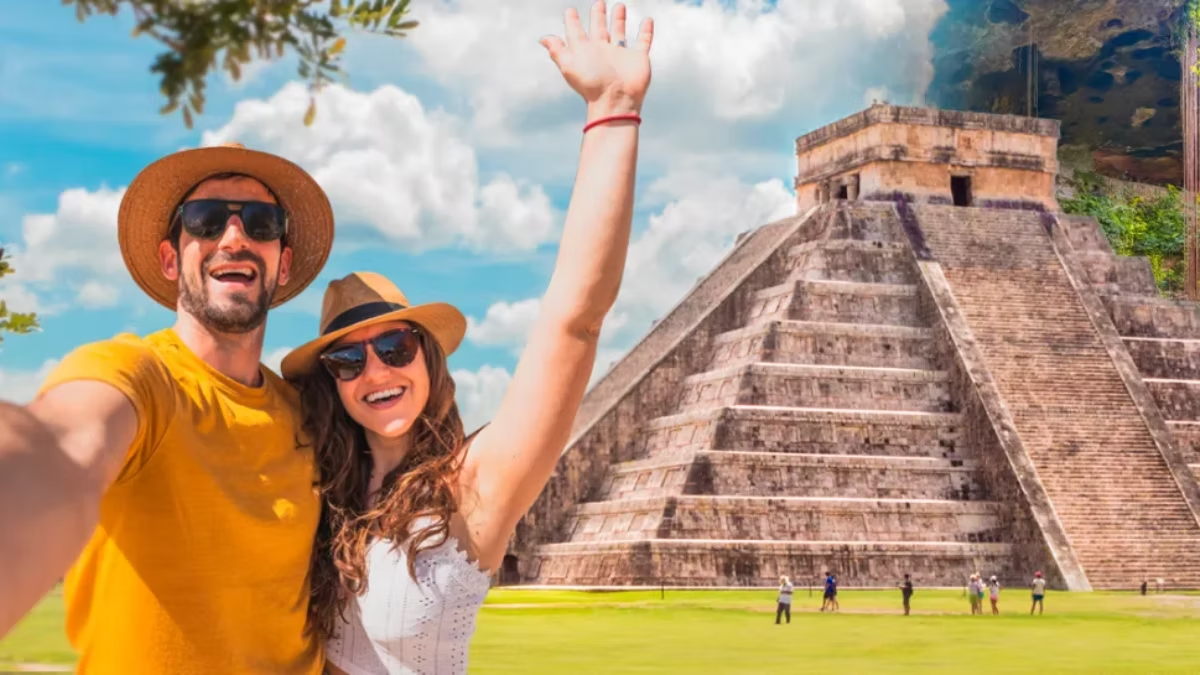
Chichén Itzá sits in central Yucatán, about 200 km (2.5–3 hours) from Cancún, 120 km (2 hours) from Mérida, and 43 km (40 minutes) from Valladolid — the closest town worth staying in. The easiest options are a guided tour with transport included, the ADO bus (cheap, comfortable, limited schedule), renting a car (most flexible), or the Tren Maya (new, fast, direct from Mérida and Cancún). Guided day tours are the most popular choice for most visitors because they handle pickup, tickets, a cenote stop, and lunch in one door-to-door package.
Chichén Itzá is famously remote — it’s not near a beach, it’s not near a major city, and it’s not walkable from anywhere. Getting there is the part of your trip that takes planning. The good news: the Yucatán Peninsula has excellent highways, a reliable first-class bus network, a brand-new high-speed train (the Tren Maya), and more organized tours than any other archaeological site in Mexico. This guide covers every route from every major starting point, with real 2026 travel times, costs, and logistics.
Where Is Chichén Itzá?
Chichén Itzá is located in the Mexican state of Yucatán, in the center of the Yucatán Peninsula, about 2 km east of the small town of Pisté. The GPS coordinates are 20.6843° N, 88.5678° W. The site is roughly equidistant from Mérida to the west and Valladolid to the east, and sits on Highway 180 — the main east-west route across the peninsula.
Note one small detail that trips up visitors: Yucatán state is on Central Time (CST), one hour behind Quintana Roo (Cancún, Playa del Carmen, Tulum), which uses Eastern Time. If you’re driving from the Riviera Maya, your clock effectively gains an hour when you cross the state line — which can help or hurt your arrival plan depending on how you read it.
Chichén Itzá from Cancún
Cancún is about 200 km (2.5–3 hours) from Chichén Itzá via Highway 180D (toll road). The three main options are: a guided day tour ($70–150 USD, door-to-door, most popular), the ADO first-class bus ($15–25 USD, one departure at 8:45 AM), or a rental car ($30–45 USD/day, most flexible). The Tren Maya also now runs from Cancún directly to a dedicated Chichén Itzá station.
Option 1: Guided Tour (Recommended for Most Visitors)
Tours are the single most popular way to visit from Cancún because they eliminate every logistics headache: hotel pickup, bilingual guide, entry tickets, cenote swim, lunch in Valladolid, and return drop-off. Expect a 12-hour day (typically 7 AM–7 PM) with 2.5 hours driving each way. The most popular option is the Chichen Itza, Cenote & Valladolid Tour with Lunch.
Option 2: ADO Bus
The ADO first-class bus departs Cancún’s downtown terminal at 8:45 AM and arrives at Chichén Itzá around 11:30 AM. The return bus leaves the archaeological zone at around 4:30 PM. One-way tickets cost around 350–500 MXN ($17–25 USD). Book at least a few days in advance during high season — these buses sell out.
The drawback is timing: arriving at 11:30 AM puts you at the site during peak crowd and peak heat. If you want the 8 AM experience, the only way via public transport is to go via Valladolid (see below).
Option 3: Rental Car
A rental car from Cancún airport runs around 30–45 USD per day with full coverage. Take Highway 180D (the cuota/toll road) — it’s a straight, easy drive of about 2.5 hours with tolls of roughly 800–900 MXN ($40–45 USD) round trip. Parking at Chichén Itzá costs 80–150 MXN.
Option 4: Tren Maya
The Tren Maya now connects Cancún directly to Chichén Itzá with a dedicated station nearby (a shuttle bus runs from the station to the main entrance). Travel time is significantly faster than driving. Check the official Tren Maya website for current schedules and pricing.
Chichén Itzá from Playa del Carmen and the Riviera Maya
Playa del Carmen to Chichén Itzá is about 155 km (2.5 hours) by car via Highway 180D. Most Riviera Maya visitors take a guided tour — it’s the simplest option since direct public transport is limited. Rental cars and private transfers are the next-best choices. ADO buses run from Playa del Carmen but routes are less frequent than from Cancún.
If you’re staying anywhere between Puerto Morelos and Tulum, a guided tour with hotel pickup is the path of least resistance. The drive each way is along a straight, well-maintained toll highway, but factor in an extra 30–45 minutes for pickup loops through coastal hotels.
Chichén Itzá from Tulum
Tulum to Chichén Itzá is about 155 km (2.5 hours) via Highway 180D. Tours are the most popular option, but self-driving is viable. There is no direct ADO bus that runs cleanly to Chichén Itzá from Tulum at useful morning hours — most bus travelers route via Valladolid.
Tulum traffic heading north in the morning can be slow. If you’re self-driving, leave before 7 AM to avoid it and to arrive at Chichén Itzá near opening time.
Chichén Itzá from Mérida
Mérida to Chichén Itzá is about 120 km (1.5–2 hours) via Highway 180. Mérida has the closest international airport to the ruins and is the quieter, more cultural base for visiting. The ADO bus runs 3–4 times daily (around 2 hours, ~200 MXN one-way), the Tren Maya now runs 6 times daily from the Teya station, and self-driving is straightforward.
Mérida is the underrated launch point for Chichén Itzá. From here you get:
- Shortest travel time of any major city base (under 2 hours)
- Earliest morning arrival — drive out at 6:30 AM and you’ll be at the entrance at 8:00 AM
- Less tourist chaos on the route compared to the Cancún–Chichén corridor
The Tren Maya schedule is particularly useful here: the earliest train gets you to the Chichén Itzá station by around 8:23 AM, before most buses arrive from the coast. Morning ADO buses from Mérida’s TAME terminal start at around 7:15 AM and take about 2 hours.
Chichén Itzá from Valladolid
Valladolid is the closest town to Chichén Itzá — just 43 km (35–40 minutes) via Highway 180D, with no toll on this segment. It’s the best base if you want to arrive at 8 AM sharp and miss every single tour bus. Colectivos (shared vans) cost 35–50 MXN, ADO buses run several times per day, and taxis run 500–700 MXN one-way.
If you’re serious about the pre-crowd experience, stay overnight in Valladolid. Leave at 7:15 AM, arrive at the parking lot at 7:50 AM, walk in at 8:00 AM opening. You’ll have 2–3 hours of nearly solo pyramid-time before the Cancún tour buses start disgorging.
Colectivos depart from Calle 39 between Calles 44 and 46 in Valladolid. They leave when full, which typically means every 20–40 minutes in the early morning. They drop you in the town of Pisté, about 500 m from the main entrance — short walk or mototaxi.
By Rental Car: What to Know
Driving in the Yucatán is genuinely easy — much easier than most of Mexico. The roads are flat, well-signed, and in good condition. The one thing to be aware of: Highway 180D is a toll road (tolls are pricey), but it’s vastly faster and safer than the free Highway 180, which passes through many small towns with topes (speed bumps) every few hundred meters.
A few practical tips:
- Carry cash in Mexican pesos for tolls — many booths don’t accept cards, and none accept foreign currency
- Book your rental at Cancún or Mérida airport for the best rates
- Take photos of the car from every angle before leaving the rental lot to avoid damage disputes
- Driving after dark is not recommended on rural highways — wildlife and unlit vehicles are common
- Parking at Chichén Itzá is 80–150 MXN, cash only
For more tips on site logistics and what else to prepare, see our things to know before visiting Chichén Itzá guide.
Arrival at Chichén Itzá: The Last Few Hundred Meters
Whichever route you take, you’ll arrive at the same main entrance parking area, about 2 km east of Pisté. If you haven’t bought your Chichén Itzá entry ticket online, you’ll pay at two separate windows (one for the INAH federal fee, one for the CULTUR state fee). Lines at these windows grow rapidly after 10 AM — another reason the 8 AM arrival strategy pays off. For hours, closing times, and late-entry rules, see our opening hours guide.
Which Option Should You Choose?
| Starting From | If You Want Convenience | If You Want Cheap | If You Want Flexibility |
|---|---|---|---|
| Cancún | Guided tour | ADO bus | Rental car |
| Playa del Carmen | Guided tour | ADO bus via Valladolid | Rental car |
| Tulum | Guided tour | ADO bus via Valladolid | Rental car |
| Mérida | Tren Maya or ADO bus | ADO bus | Rental car |
| Valladolid | Guided tour | Colectivo | Rental car or taxi |
For the specific trade-offs between booking a guided tour versus going independently, our tours hub compares every option.
Frequently Asked Questions
What is the closest airport to Chichén Itzá?
Mérida International Airport (MID) is the closest, about 120 km / 1.5–2 hours away. Cancún International Airport (CUN) is 200 km / 2.5–3 hours away but has far more international flight options, which is why most visitors fly into Cancún despite the longer drive.
How long does it take to drive from Cancún to Chichén Itzá?
About 2.5–3 hours each way via Highway 180D (the toll road). The drive is straightforward — a mostly straight, well-maintained highway. Expect 800–900 MXN in round-trip tolls. The free Highway 180 is 45–60 minutes slower because it passes through small towns with frequent speed bumps.
Is the Tren Maya a good way to get to Chichén Itzá?
Yes — particularly from Mérida. It’s faster than driving, comfortable, and drops you at a dedicated Chichén Itzá station with a shuttle bus to the entrance. From Cancún, the train is also viable but less established than the bus and tour alternatives. Check the official Tren Maya website for current schedules.
Can I take a bus from Cancún Airport directly to Chichén Itzá?
No direct bus runs from Cancún Airport to Chichén Itzá. You’ll need to transit through downtown Cancún’s ADO terminal or route via Valladolid. Most airport arrivals either rent a car on the spot or take a tour that includes hotel pickup the following day.
Is it worth renting a car to visit Chichén Itzá?
It’s worth it if you want to combine Chichén Itzá with cenotes, Valladolid, or Ek Balam on your own schedule, and if you’re comfortable driving in Mexico. For a single-focus day trip, a tour is often cheaper once you factor in fuel, tolls, parking, and rental costs.
How much does parking cost at Chichén Itzá?
Parking at the main entrance costs 80–150 MXN (about $4–7 USD), paid in cash only. Touts along the approach road will try to wave you into unofficial lots; continue to the official site parking, which is signed and secure.
Is Chichén Itzá in a different time zone from Cancún?
Yes. Chichén Itzá is in Yucatán state (Central Time, CST), while Cancún and the Riviera Maya are in Quintana Roo (Eastern Time, EST) — a one-hour difference. If you drive from Cancún, your phone may auto-adjust when you cross the state line.
Can I visit Chichén Itzá as a day trip from Tulum or Playa del Carmen?
Yes. Both are about 2.5 hours away by car. Most visitors from Tulum or Playa del Carmen take organized day tours because direct public transport is awkward. Self-driving is viable if you leave before 7 AM to beat traffic and arrive near opening time.
