

Chichén Itzá in One Day: Sample Itinerary
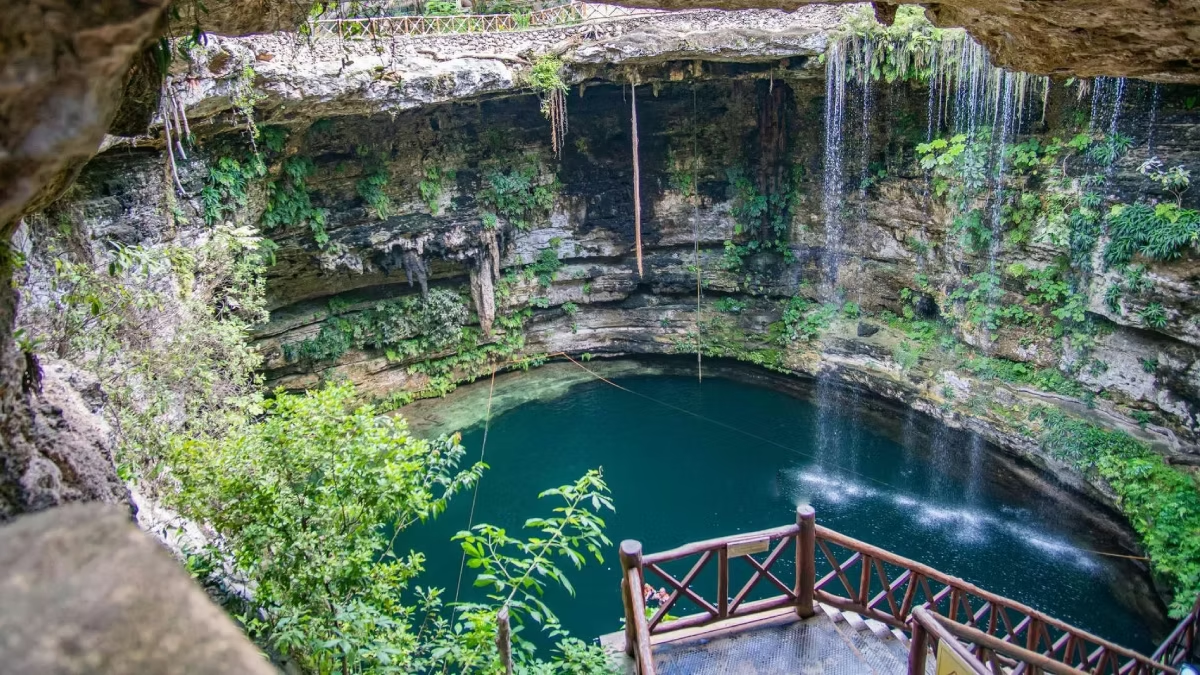
A perfect one-day Chichén Itzá itinerary runs from roughly 7:00 AM to 7:00 PM and looks like this: depart your hotel at 7:00 AM (Valladolid) or 5:30–6:30 AM (Cancún/Mérida), arrive at the gate for 8:00 AM opening, visit the archaeological site in counter-clockwise order starting with El Castillo for 2.5–3 hours, leave by 11:30 AM before peak heat and crowds, drive 10 minutes to Cenote Ik Kil for a swim and lunch (12:00–2:00 PM), spend 1–1.5 hours exploring the colonial town of Valladolid (2:30–4:00 PM), then return to your base by early evening. This is the exact pattern most organized day tours follow because it works.
Chichén Itzá rewards a carefully timed day more than almost any other attraction in Mexico. Get the sequence right — arrive at 8 AM, prioritize El Castillo first, finish before 11:30 AM — and you get the site nearly to yourself with cool temperatures and clean photos. Get it wrong and you’re shuffling through 8,000 other visitors in 34°C (93°F) midday heat. This itinerary gives you the exact order, timing, and add-ons used by experienced travelers, with variations depending on where you’re based.
The one-day itinerary at a glance
Plan for 4–5 hours total on-site time (including cenote and lunch) and 2–6 hours of driving depending on your starting city. The ideal day allocates 2.5–3 hours at Chichén Itzá, 1 hour at a nearby cenote, 1–1.5 hours in Valladolid, and buffer time for driving and meals. Most visitors comfortably cover Chichén Itzá + Cenote Ik Kil + Valladolid in a single day; adding Ek Balam or Cobá requires a longer day or a second visit.
| Time | Activity | Duration |
|---|---|---|
| 5:30–7:15 AM | Depart hotel (varies by base city) | 40 min – 3 hr |
| 7:50 AM | Arrive at Chichén Itzá parking lot | — |
| 8:00 AM | Gates open; enter site | — |
| 8:05–11:00 AM | Explore Chichén Itzá (counter-clockwise route) | ~3 hours |
| 11:15 AM | Depart toward Cenote Ik Kil | 10 min drive |
| 11:30 AM – 1:00 PM | Swim at Cenote Ik Kil, change, relax | 1.5 hr |
| 1:00 – 2:00 PM | Lunch (on-site at Ik Kil or in Pisté/Valladolid) | 1 hr |
| 2:30 – 4:00 PM | Explore Valladolid — main square, Calzada de los Frailes, cenote | 1.5 hr |
| 4:00 – 7:00 PM | Drive back to base | 40 min – 3 hr |
Morning: depart your base and arrive at 8 AM
If you’re staying in Valladolid
Leave your hotel by 7:10–7:15 AM. A rental car, taxi, or colectivo gets you to the parking lot by 7:50 AM. This is the best case scenario — short drive, no rush, fresh start.
If you’re staying in Pisté
You can leave as late as 7:40 AM and still walk or mototaxi to the gate by 7:50 AM. Pisté to the main entrance is a 5-minute drive or 25-minute walk. Have a quick breakfast beforehand.
If you’re staying in Mérida
Leave by 6:00–6:15 AM to cover the 2-hour drive and arrive at 8:00 AM. Grab breakfast on the road or at your hotel before departure. The Tren Maya is an alternative — check current schedules for the earliest departure.
If you’re staying in Cancún, Playa del Carmen, or Tulum
Leave by 5:30–6:00 AM to cover the 2.5–3 hour drive. Most visitors skip this logistical pain and book a guided tour that handles pickup and transport. A typical Chichén Itzá, Cenote & Valladolid day tour picks up from 6:30 AM and returns around 7:00 PM.
8:00 AM – 11:00 AM: Chichén Itzá
At Chichén Itzá, walk the main entrance path to the central plaza, head straight to El Castillo first (it dominates the central square), then move counter-clockwise to visit the Great Ball Court, Tzompantli, Temple of the Warriors, the Group of a Thousand Columns, the Sacred Cenote (via the forested path), El Caracol (the observatory), and the Nunnery Complex in Old Chichén. Plan 2.5–3 hours at minimum — rushing cuts out the less-visited but historically important southern structures.
The counter-clockwise route
Most day-tour groups follow a similar path, which is why it works. When you enter the archaeological zone through the turnstile, walk the tree-lined path for about 200 meters until it opens into the central plaza. El Castillo will be directly in front of you.
Stop 1: El Castillo (Temple of Kukulkán) — 20–30 minutes
The 24-meter step pyramid dominates the central plaza. Walk its full perimeter, examine each of the four sides (each has 91 steps plus the top platform, totaling 365 — one for each day of the solar year), and take photos from the northwest corner for the best angle. Clap your hands at the base of the main staircase and listen for the chirping-bird echo — a deliberate Maya acoustic effect.
Stop 2: The Great Ball Court — 20 minutes
Just northwest of El Castillo, this is the largest and best-preserved Mesoamerican ball court in existence — 168 meters long. Note the stone rings mounted high on the walls, the carved reliefs of ball-game players at the base, and the court’s extraordinary acoustics (a whisper from one end can be heard at the other).
Stop 3: Tzompantli (Wall of Skulls) — 10 minutes
A low platform on the north side of the Great Ball Court, carved with rows of human skulls. This is where the heads of sacrifice victims were displayed. Disturbing in implication, historically crucial.
Stop 4: Platform of Venus & Platform of Jaguars and Eagles — 10 minutes
Two smaller ceremonial platforms near El Castillo, decorated with Toltec-style imagery (feathered serpents, jaguars, eagles eating hearts). Often overlooked but important for understanding the site’s Toltec influence.
Stop 5: Temple of the Warriors & Group of the Thousand Columns — 25 minutes
East of El Castillo — a large pyramid temple with a Chac Mool reclining figure at the summit, flanked by rows and rows of carved columns that once supported a vast roof structure. Walk among the columns for a sense of the temple complex’s original scale.
Stop 6: Sacred Cenote — 20 minutes
Walk the forested path (signed “Cenote Sagrado”) from the north edge of the main plaza, about 300 meters. The cenote is a 60-meter natural sinkhole where Maya priests conducted rain-god rituals, dropping offerings — including human sacrifice victims — into the water. The surface is usually green with algae. Not swimmable.
Stop 7: El Caracol (The Observatory) — 20 minutes
Walk south from the central plaza toward the Old Chichén complex. El Caracol is a round, two-tiered tower — highly unusual for Maya architecture — designed as an astronomical observatory. Slit windows aligned with the movements of Venus and the sun.
Stop 8: The Nunnery Complex and Akab Dzib — 20 minutes
Further south, in what’s known as Old Chichén (Chichén Viejo). These older buildings predate the Toltec-era structures by a century or more and feature denser, more intricate stone carving. Skipped by rushed tour groups, rewarding for serious visitors.
By 11:00 AM you’ll have covered the essentials. The temperature will be climbing past 30°C (86°F), the tour buses will be disgorging at the entrance, and you’ll have earned your departure.
11:15 AM – 1:00 PM: Cenote break
The closest major cenote to Chichén Itzá is Cenote Ik Kil — 10 minutes by car from the main entrance. It’s a dramatic open-air circular cenote about 40 meters deep, with vines trailing down the walls. Entry is around 150–180 MXN. Other popular nearby cenotes include Saamal (inside Hacienda Selva Maya, often included in tours), Suytun (30 minutes away, famous for its light-beam photo), and Xcajum and Nool Ha (smaller, less crowded, closer to Valladolid).
Cenote Ik Kil (most common choice)
- Distance from Chichén Itzá: 10 minutes / 5 km
- Entry fee: ~150–180 MXN adults
- Time needed: 1–1.5 hours (swim + change + lunch on-site)
- Facilities: Lockers, showers, life jackets (required), restaurant
Ik Kil is the cenote used by most organized day tours for good reason — it’s close, photogenic, and has a full visitor complex with changing rooms and a restaurant. The swim is refreshing after a hot morning at the ruins. It is often busy by midday, but the water is deep and there’s room for everyone.
Alternative cenotes
- Cenote Saamal (inside Hacienda Selva Maya) — often included in upgraded tours; quieter than Ik Kil
- Cenote Suytun — famous for a stone platform and a shaft of light; 30 min further east toward Valladolid
- Cenote Oxman / Cenote Zací — both inside or beside Valladolid; good combined with the town visit
1:00 – 2:00 PM: Lunch
Most day tours include buffet lunch in Valladolid (usually at a restaurant on the main plaza) or Pisté (buffet restaurants around 160–250 MXN per person). If you’re self-driving, options include:
- Restaurant at Cenote Ik Kil (buffet, convenient, tourist-priced)
- Local restaurants in Valladolid
- Yucatecan specialties: cochinita pibil, panuchos, sopa de lima, papadzules
2:30 – 4:00 PM: Valladolid
Valladolid is a colonial town 40 minutes from Chichén Itzá with enough character for a comfortable 1.5-hour stop. Must-sees include the main plaza (Parque Francisco Cantón Rosado), the pastel-lined Calzada de los Frailes leading to the yellow Church of San Bernardino de Siena, Casa de los Venados (private art collection), and Cenote Zací right in the town center if you want a quicker second swim.
Even on a day tour, you’ll likely get 1–1.5 hours of free time in Valladolid. Priorities:
- Main plaza — Sit on a bench, people-watch, grab a fresh marquesita (local churro-like dessert)
- Calzada de los Frailes — Photogenic colonial street; 10-minute walk from the main square
- San Bernardino de Siena church — 16th-century monastery at the end of the Calzada
- Cenote Zací — Open-air cenote inside the town, walking distance from the plaza (~50 MXN entry)
4:00 – 7:00 PM: Return to your base
Drive time back varies by starting point. If you’re on a tour, you’ll typically be back at your hotel around 6:30–7:00 PM. If you’re self-driving, aim to be off rural highways before dusk — animals and unlit vehicles become hazards after sunset.
Variations on the basic itinerary
The equinox itinerary (March 19–21 or September 22–23)
Stay for the late-afternoon serpent shadow on El Castillo instead of leaving at 11:30 AM. The shadow effect peaks between 3:30 PM and 5:00 PM on equinox day. Expect enormous crowds (15,000+ people). Cover El Castillo, the Great Ball Court, and the Temple of the Warriors in the morning, rest at a nearby cenote during midday, and return to the site around 2:30 PM to claim a viewing position.
The slow-paced itinerary (for serious history enthusiasts)
Spend all day at Chichén Itzá. Cover the main zone in the morning, break for a long lunch at a nearby hotel, then return to the site after 2 PM when groups have thinned out to explore Old Chichén, the Nunnery, and the more obscure structures. Last admission is 4 PM.
The combo-ruins itinerary (very ambitious)
Pair Chichén Itzá with Ek Balam in the same day — this requires a 5:30 AM start and a rental car. Do Chichén Itzá first (8:00–10:30 AM, condensed route), then drive to Ek Balam (1 hour, where you can still climb the main pyramid), spending 1.5–2 hours there. Lunch in Valladolid, then return. It’s a packed day.
The sunrise itinerary (for hacienda-zone guests)
If you’re staying at Mayaland, The Lodge, or Hacienda Chichén, use the private entrance to be inside the site by 7:30 AM. You’ll have a full 30 minutes alone with El Castillo before the main gate opens. Worth every peso.
What to pack for the day
- Water (1.5–2L per person)
- Sunscreen, hat, sunglasses
- Swimsuit and quick-dry towel for the cenote
- Mexican pesos in cash
- Small day bag
- Phone with offline maps and camera
Full packing list in our things to know before visiting guide.
Why this itinerary works
Three reasons this sequence has become the default for experienced Yucatán travelers and nearly every major tour operator:
- Heat management — You’re at the exposed ruins during the coolest hours (22–28°C / 72–82°F) and at the cenote during the hottest (32°C+ / 90°F+)
- Crowd avoidance — You’ve left Chichén Itzá before the tour buses disgorge, and you’re at Valladolid in the quieter afternoon
- Story arc — Ancient ruins → refreshing natural swim → colonial town lunch creates a satisfying one-day narrative rather than a rushed checklist
Frequently Asked Questions
How much time do you need at Chichén Itzá?
Most visitors spend 2.5–3 hours on-site to see the major structures (El Castillo, Great Ball Court, Temple of the Warriors, Sacred Cenote, El Caracol). Serious history enthusiasts can easily spend 4–5 hours covering everything including Old Chichén and the Nunnery complex. Minimum useful time is around 2 hours.
What is the best order to see Chichén Itzá?
Start with El Castillo (directly ahead as you enter the main plaza), then move counter-clockwise — Great Ball Court → Tzompantli → Platform of Venus → Temple of the Warriors → Group of a Thousand Columns → Sacred Cenote → El Caracol → Nunnery Complex. This order minimises backtracking and follows the path that most tour groups use.
Can you do Chichén Itzá and Ek Balam in one day?
Yes, but it’s a long day. Start Chichén Itzá at 8 AM, spend 2.5 hours, then drive 1 hour to Ek Balam, spend 1.5–2 hours (including climbing the main pyramid, which is still permitted at Ek Balam), grab a late lunch in Valladolid, and return. Best suited to confident self-drivers with an early start.
Is one day enough for Chichén Itzá?
Yes. A well-timed single day covers everything most visitors want to see — the archaeological site, a nearby cenote, and colonial Valladolid. Two days are worth considering only if you want to combine multiple archaeological sites (Ek Balam, Cobá, Uxmal) or spend more time in Valladolid and the surrounding region.
What time should you leave Chichén Itzá?
For the best experience, leave by 11:30 AM. By then, you’ve seen the major structures, the heat is climbing past 32°C (90°F), and the site is full of tour groups. Leaving this early also gives you time for the cenote + Valladolid combination in the afternoon.
Is Cenote Ik Kil worth visiting?
Yes — it’s the closest major cenote to Chichén Itzá (10 minutes away), dramatic to look at, and refreshing after a hot morning. It can get crowded midday, but it’s genuinely photogenic and the water is deep and clean. Most day tours include it as standard, which is why you see it on so many itineraries.
Can you visit Chichén Itzá in half a day?
Technically yes, but only if you arrive at 8 AM opening and move briskly through the main structures in about 2 hours. You’ll miss Old Chichén and the more obscure southern buildings. A half-day visit also doesn’t justify the 2.5-hour drive from Cancún — if you’re traveling from the coast, commit to a full day.
Do I need to book the itinerary sites in advance?
Book your Chichén Itzá entry ticket online to skip the queues at the gate. Cenote Ik Kil doesn’t usually require pre-booking. Valladolid restaurants rarely need reservations outside of peak season. If you’re doing a guided tour, the operator handles everything.
