

Things to Know Before Visiting Chichén Itzá
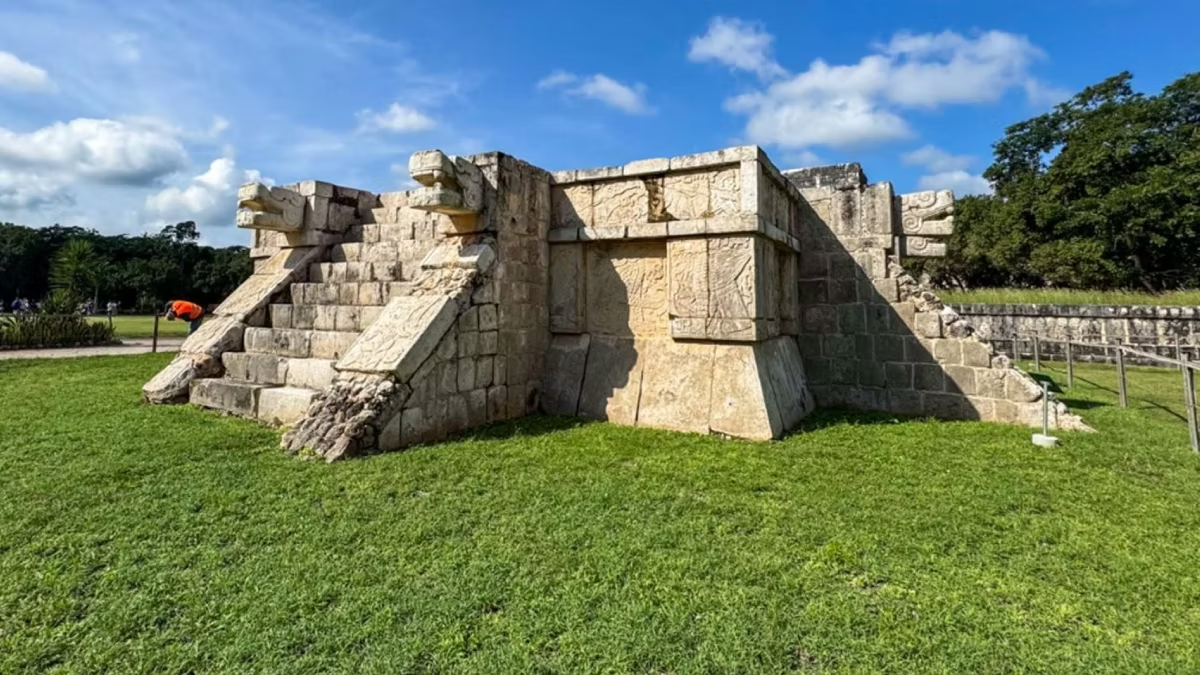
Before visiting Chichén Itzá, know that the site is large (about 4 square miles) with almost no shade, temperatures reach 32–37°C (90–97°F), and climbing El Castillo or any of the other pyramids has been strictly prohibited since 2006. Wear closed-toe walking shoes, a wide-brimmed hat, and reef-safe sunscreen; bring 1.5–2 liters of water per person, Mexican pesos in cash, and a small backpack. The site is partially wheelchair accessible — the main plaza is flat but unpaved, and ramps exist at the entrance. Drones, tripods, food inside the zone, and wedding-dress photoshoots are all banned without prior INAH permission.
Chichén Itzá is a large, sun-exposed archaeological site with rules that catch many first-time visitors off guard. You can’t climb the pyramids, you can’t fly a drone, you can’t bring food inside the zone, and the heat is genuinely punishing between 11 AM and 3 PM. This guide covers everything you should know before you go — what to wear, what to pack, what’s prohibited, how accessibility works, photography rules, and the small practical details that make the difference between a great visit and an exhausting one.
What to Wear at Chichén Itzá
Wear light, breathable, light-colored clothing (linen, cotton, moisture-wicking fabrics), closed-toe walking shoes or sturdy sandals (Tevas, Birkenstocks, or sneakers — avoid flip-flops), and a wide-brimmed hat. The site is 90% unshaded, temperatures sit at 30–37°C (86–97°F) most of the year, and you will walk 3–5 kilometers over dirt paths and stone. Dress for heat, sun, and dust — not for the beach.
The single most common mistake visitors make is dressing for a casual beach day instead of for several hours of exposed walking. Here’s what actually works:
- Shoes: Closed-toe walking shoes or sturdy hiking sandals are ideal. Running shoes work fine. Flip-flops are a bad choice — the paths are stone and dirt, and loose stones catch under flimsy footwear. Make sure whatever you wear is broken in; long days in new shoes end badly.
- Clothing: Light colors reflect heat. Breathable fabrics like linen, cotton, and moisture-wicking athletic wear are far better than denim or heavy synthetics. Shorts, sundresses, and short-sleeve shirts are all fine, but if you burn easily, a light long-sleeve shirt is smarter than relying on sunscreen alone.
- Hat: Non-negotiable. A wide-brimmed hat protects your face, ears, and neck. Baseball caps help but don’t cover enough.
- Sunglasses: The white limestone reflects sunlight aggressively. UV-protective sunglasses reduce eye strain dramatically.
- Swimsuit (if you’re stopping at a cenote): Most tours include a cenote swim. Wear or pack a swimsuit and quick-dry clothes.
- Light jacket or shawl: Tour buses run the AC very cold. If you’re on a day tour from Cancún or Mérida, pack a layer for the drive.
What NOT to Wear
- Flip-flops (unstable on dirt and stone paths)
- Heels or any formal shoe (you’ll regret it within 20 minutes)
- Heavy jeans (will soak through with sweat by mid-morning)
- White linen after 10 AM (red Yucatán dust is relentless)
What to Bring
Bring at least 1.5–2 liters of water per person, Mexican pesos in cash (for parking, food, and backup if ticket booth cards fail), sunscreen (SPF 50+), insect repellent, a small backpack or day bag, a refillable water bottle, snacks, and your phone with offline Google Maps downloaded. Food is not sold inside the archaeological zone, only in the entrance plaza.
A practical packing list for your day bag:
- Water — 1.5–2 liters per person minimum; there are no water fountains inside the site
- Sunscreen — SPF 50+, reef-safe if combining with a cenote swim
- Insect repellent — Mosquitoes are present in shaded jungle areas, especially in rainy season
- Cash (Mexican pesos) — For parking (80–150 MXN), food, souvenirs, and backup at ticket booths
- Credit card — Backup payment method, though cash is king
- Small backpack or day bag — Daypacks and handbags are permitted inside; large luggage must be stored
- Phone + portable charger — Signal is spotty inside the zone; save maps offline
- Snacks — Granola bars, fruit, nuts; you’ll be out all day
- Hat and sunglasses — See above
- Camera — Phones are fine; no tripods or drones without permit
What’s Banned or Restricted Inside the Site
- Drones — Strictly prohibited without prior written INAH permission
- Tripods and professional camera gear — Require a permit and fee
- Food — Not allowed inside the archaeological zone (only water)
- Large luggage — Must be stored at the entrance luggage facility (small fee)
- Wedding dresses and professional photo/video shoots — Prohibited without permit
- Climbing the structures — See below
- Leaving the designated paths — Can get you fined or escorted out
You Cannot Climb El Castillo (or Any Pyramid)
Climbing El Castillo and all other pyramids at Chichén Itzá has been prohibited since 2006, following a fatal accident and growing concerns about erosion. There are no exceptions for any visitor, any ticket type, any tour, or any time of year. Violators face fines and removal from the site. You can photograph the pyramids from ground level from multiple angles.
Older guidebooks and social media posts still occasionally show people standing on top of the pyramid. That was legal until 2006 — it isn’t now. Site security actively patrols, and anyone who crosses the barrier rope around El Castillo is escorted out. This also applies to:
- The Temple of the Warriors
- The Osario (High Priest’s Temple)
- The platforms around the Great Ball Court
- Every other stepped structure at the site
You can still photograph all of them, and you can still walk right up to the base of most structures. You just can’t go up.
Accessibility at Chichén Itzá
Chichén Itzá is partially wheelchair accessible — more so than most Mayan archaeological sites. The entrance area is flat and paved, and the main central plaza (including El Castillo, the Great Ball Court, and the Temple of the Warriors) is flat but unpaved with compacted dirt and small stones. There are ramps at the entrance, a dedicated accessible restroom, and two wheelchair parking spaces near the main entrance. Manual wheelchair users typically need a companion for the looser sections and the paths toward the Sacred Cenote.
Some practical notes for visitors with mobility needs:
- Parking: Two accessible spots near the entrance, though they can be narrow by US standards. A staff member usually monitors the lot.
- Entrance: A ramp leads from the parking lot up a small hill to the visitor center. The indoor entrance hall and ticket plaza are flat concrete.
- Main plaza: Flat, but the surface is compacted dirt with loose pebbles. Manual wheelchair users can cover the major structures but may want help on the looser patches.
- Sacred Cenote path: The walk from the main plaza to the Sacred Cenote is through jungle on a narrower dirt path — manageable, but bumpier.
- Old Chichén / Nunnery: The southern complex (Old Chichén) is the least accessible, with more uneven terrain and small inclines.
- Rain: Paths get muddy after heavy rain and soak through slowly — avoid visiting right after a storm if rolling a wheelchair.
- Restrooms: There is at least one accessible restroom near the entrance.
- Strollers: Jogging strollers and robust models handle the site fine; small umbrella strollers will struggle on the rougher paths.
Photography, Tripods, and Drones
Personal photography is free at Chichén Itzá — you can take as many photos and videos with your phone or regular camera as you like. Tripods, professional camera rigs, and drones all require prior INAH permission and fees. Commercial photography, fashion shoots, and wedding-dress sessions are prohibited without permits. Selfie sticks are generally allowed but may be restricted in certain areas.
The pyramid looks dramatic from almost any angle, but a few spots stand out:
- Front (north) face of El Castillo at 8:30–9:30 AM — Morning light, long shadows, thin crowds
- Across the plaza from the southwest — Shows El Castillo with the Temple of the Warriors in the background
- Great Ball Court wall corner — The perfect angle for scale shots
- Late afternoon golden hour — After 3 PM, when tour groups thin out
Food, Drinks, and Facilities at the Site
There is no food or drink sold inside the archaeological zone itself — only water is permitted inside. However, at the main entrance plaza (outside the turnstiles) you’ll find:
- Toilets (reasonably maintained, bring tissues just in case)
- Several gift shops and souvenir stalls
- A few small restaurants and snack bars
- A luggage storage area (small fee)
- An ATM (unreliable — bring cash in advance)
- Water vendors selling chilled bottled water (3–5x store prices, but welcome after a hot morning)
For a bigger meal, the town of Pisté is 2 km away and has several local restaurants, with the Puerto Chichén hotel offering a well-known buffet around 160 MXN per person. If you’re on a tour, lunch is typically included in Valladolid at the end of your archaeological visit.
Vendors Inside the Site
Starting around 10 AM, dozens of vendors set up along the paths selling wooden masks, obsidian jaguars, blankets, hammocks, and trinkets. They are technically not supposed to be inside the archaeological zone, but enforcement is inconsistent. Most are polite and don’t push hard. A few practical notes:
- Prices are negotiable; start at 30–50% of the asking price
- Many items are mass-produced, not genuine handcraft, despite claims otherwise
- Buying directly at the entrance plaza (outside the zone) supports a more regulated market
Chichén Itzá Is on Central Time
A detail that regularly surprises visitors from the Cancún side: Chichén Itzá is in Yucatán state, which observes Central Time (CST). Cancún, Playa del Carmen, and Tulum observe Eastern Time (EST) — one hour ahead. This means the 8 AM opening is 9 AM Cancún time. Most phones auto-adjust at the state line, but double-check your clock before making any return-trip plans.
Is Chichén Itzá Safe?
Chichén Itzá is one of the safest major attractions in Mexico — heavy tourist police presence, well-lit areas, and controlled entry. Petty pickpocketing can happen in crowded areas around the ticket booths, so keep valuables in a secure day bag. On the drive, use the toll road (180D) rather than the free highway, and avoid driving after dark.
For a full walk-through of logistics on the day itself, see our opening hours and ticket booth guide. For the best times of day and year to visit, see best time to visit Chichén Itzá.
Quick Pre-Visit Checklist
- Buy entry ticket online or confirm tour booking
- Check the weather forecast the day before
- Fully charge your phone and download offline Google Maps
- Withdraw Mexican pesos in cash
- Pack water, sunscreen, hat, snacks, insect repellent
- Wear broken-in walking shoes and a hat
- Set an early alarm — aim to arrive at 7:45 AM
- Pack a light layer for the bus AC on the drive back
Frequently Asked Questions
Can you climb El Castillo at Chichén Itzá?
No. Climbing El Castillo and all other pyramids at Chichén Itzá has been banned since 2006. This applies to every visitor and every ticket type, year-round. You can only view the structures from the ground.
Is Chichén Itzá wheelchair accessible?
Partially yes. The entrance is paved and has ramps, and the main central plaza is flat but unpaved. Manual wheelchair users can access El Castillo, the Great Ball Court, and the Temple of the Warriors with some effort. Old Chichén and the path to the Sacred Cenote are rougher. Companion assistance is recommended.
Can I bring food into Chichén Itzá?
No. Food is not permitted inside the archaeological zone — only water. You can eat at the entrance plaza before or after your visit, or at restaurants in Pisté village (2 km away). Most guided tours include lunch in Valladolid after the visit.
Are drones allowed at Chichén Itzá?
No. Drones are strictly prohibited at Chichén Itzá without prior written INAH permission, which is difficult to obtain and requires a fee. Violators face fines and equipment confiscation.
What is the dress code at Chichén Itzá?
There is no strict dress code — wear whatever is practical for hot, sunny, and dusty conditions. Shorts, sundresses, and T-shirts are all fine. Avoid flip-flops (the paths are uneven), and bring a hat and sunglasses. Professional photo shoots and wedding dresses require permits.
Do I need to hire a guide at Chichén Itzá?
No, guides are optional. You can explore the site on your own with a self-guided audio app or a good map. However, Chichén Itzá has minimal signage inside, so without a guide you’ll miss much of the history and symbolism. Licensed guides can be hired at the main entrance for 1,000–1,500 MXN per small group.
Can I bring a backpack into Chichén Itzá?
Yes, small backpacks and day bags are allowed. Large suitcases and oversized bags must be stored at the luggage facility near the entrance (small fee). Bags may be checked by security at the entry turnstile.
Is there shade inside Chichén Itzá?
Very little. The main plaza is almost entirely exposed. You’ll find shade only along a few tree-lined paths (particularly the walk to the Sacred Cenote) and inside the partial shelter of some ruined structures. This is why morning visits are essential in the dry season and early afternoon.
What time should I arrive at Chichén Itzá?
Arrive by 7:45 AM to be among the first through the gates at 8:00 AM opening. This gives you nearly two hours before tour buses begin arriving around 10:30 AM, and keeps you out of the worst midday heat.
