

Chichén Itzá + Cenote Tours
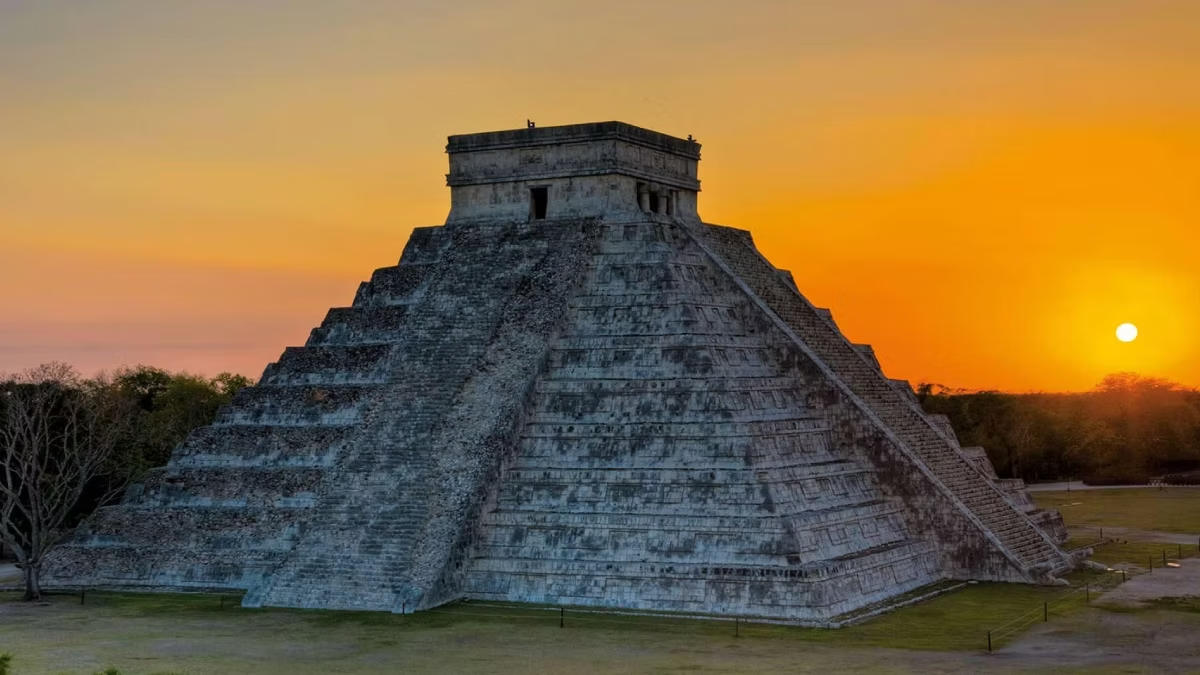
Most Chichén Itzá tours include a cenote swim, but which cenote you get depends entirely on which tour you book. The five cenotes commonly paired with Chichén Itzá tours are Ik Kil (the most famous, open-air sinkhole 3 km from the ruins, ~200 MXN entry), Suytun (underground chamber with iconic light beam 45 km away, best photographed 10 AM–1 PM), Hubiku (semi-open cave with hanging tree roots, 100 MXN base / 350 MXN with lunch), Saamal (quieter, inside Hacienda Selva Maya, often on premium tours), and Xunáan (specifically featured on the Cenote Xunáan & Valladolid combo tours). The cenote visit typically takes 30–45 minutes and is positioned right after the hot morning at the ruins. Which cenote to pick depends on what you want: Ik Kil for the iconic photo, Suytun for the light beam, Hubiku for the quieter atmosphere plus tequila tasting, Saamal for minimal crowds, or Xunáan if you’re on a premium combo tour.
The cenote swim is Chichén Itzá’s natural afterparty. After 2.5 hours of sun-exposed walking at the archaeological site, dropping into a cool underground freshwater pool isn’t just refreshing — it’s a genuinely memorable cultural experience. The Maya considered cenotes sacred portals to the underworld; the Yucatán Peninsula has thousands of them because the porous limestone bedrock creates natural sinkholes wherever cave ceilings have collapsed. This guide compares the five cenotes most often included in Chichén Itzá tours, explains which tour pairs with which cenote, and helps you pick based on what you actually want to experience.
Top Tickets
Why nearly every tour includes a cenote
Cenote stops are standard on Chichén Itzá day tours because they solve three practical problems at once: they cool visitors down after the hot archaeological site (temperatures at the ruins can reach 34°C / 93°F by noon), they fill time during the hottest part of the day (midday, when the ruins are least pleasant), and they provide a uniquely Yucatán cultural experience that most international visitors wouldn’t otherwise encounter. Cenotes are essentially caves filled with cool, filtered groundwater — the Maya considered them sacred and they remain central to Yucatán identity today.
The timing on a standard tour is no accident:
- 8:00–11:00 AM: Chichén Itzá (cool morning, exposed site)
- 11:30 AM–1:00 PM: Cenote (midday, cool water, out of the sun)
- 1:30–2:30 PM: Lunch in Valladolid (midday heat, indoor restaurant)
- 3:00–4:00 PM: Valladolid walking (heat slightly easing)
If you swap the order, you end up doing the sun-exposed archaeological walk at the hottest time of day. The cenote-as-midday-break structure is the reason nearly every operator builds the day this way.
The five cenotes commonly included
1. Cenote Ik Kil — the iconic one
The most famous cenote near Chichén Itzá and the one featured in nearly every Yucatán travel photo you’ve ever seen. Located just 3 km from the archaeological site, Ik Kil is a dramatic open-air circular sinkhole about 60 meters in diameter and 40 meters deep, with vines and tree roots hanging down from the rim to the water. Water level sits about 26 meters (85 feet) below ground.
- Type: Open-air sinkhole
- Entry fee: ~200 MXN base (about 10–15 USD), or 350 MXN with buffet lunch
- Depth: 40 meters
- Facilities: Stone staircase down, diving platforms (5m and 4m), changing rooms, lockers, life jackets (often required), restaurant
- Open: 9:00 AM – 5:00 PM daily
- Best for: First-time cenote visitors, the iconic photo, easy accessibility
- Drawback: Very busy at midday (this is where most tour buses stop)
- Featured on: The Chichen Itza, Cenote & Valladolid Tour with Lunch, many standard Cancún and Riviera Maya tours
Ik Kil is where Red Bull Cliff Diving competitions have been held (2010, 2011, 2014), jumping from 100 feet up. Tourist diving is limited to the 4–5 meter platforms. Black catfish swim in the water — a slightly eerie touch. Lotion and sunscreen must be rinsed off before entering to protect the ecosystem.
Book This Tour2. Cenote Suytun — the Instagram cenote
The most photographed cenote on the Yucatán Peninsula, located 45 km from Chichén Itzá near Valladolid. Suytun is a fully enclosed underground chamber with a narrow opening in the ceiling. When sunlight hits that opening between 10 AM and 1 PM, it creates a dramatic vertical beam of light that lands on a stone platform in the center of the pool — the famous photo everyone takes.
- Type: Underground cave cenote
- Entry fee: ~$10–12 USD
- Facilities: Stone walkway into the water, changing rooms, lockers
- Best for: Photography, Instagram shots, cool underground ambiance
- Drawback: Very crowded at peak light-beam hours; line to stand on the central platform can be 15–30 minutes
- Featured on: Chichen Itza, Cenotes Suytun & Ik-kil, and Valladolid Guided Tour, From Valladolid: Chichén Itzá, Cenote Xcajum & Cenote Nool Ha Small group Tour (as an alternative), some premium combo tours
Suytun’s light beam is seasonal — it’s strongest on sunny days between March and September, and weaker on overcast days or in winter. If you’re visiting specifically for the photo, target a sunny weekday midday.
Book This Tour3. Cenote Hubiku — the quieter alternative
A semi-open cave cenote located 17 km from Valladolid, en route between Chichén Itzá and Ek Balam. The ceiling has a small natural opening that lets sunlight filter down, but the cenote is mostly enclosed — creating a different kind of atmosphere than the open-air Ik Kil. Long tree roots cascade down from the ceiling to the water.
- Type: Semi-open cave cenote
- Entry fee: ~100 MXN alone, or 350 MXN with buffet lunch; lockers ~10 MXN
- Facilities: Platform for easy entry, changing rooms, restaurant, Tequila Museum on-site
- Open: 9:00 AM – 5:00 PM
- Best for: Travelers wanting a quieter atmosphere than Ik Kil, tequila enthusiasts, families (family-friendly facilities)
- Drawback: Further from Chichén Itzá than Ik Kil (adds ~30 minutes to the tour day)
- Featured on: Chichen Itza, Ek Balam, Cenote & buffet lunch Early Access Tour, Chichen Itza, Cenote, & Ek Balam Small Group Early Access Tour, Chichén Itzá + Ek Balam combo tours
The on-site Tequila Museum (Parador Turístico Hubiku) is free with the cenote ticket and offers short tastings — a small but genuinely pleasant cultural add to the cenote stop.
Book This Tour4. Cenote Saamal — the premium-tour choice
Located inside Hacienda Selva Maya near Valladolid, Saamal is a partially-open cenote that’s often reserved for premium and smaller-group tours. Because access runs through the hacienda grounds (which require a tour booking to enter), it stays far less crowded than the independently-accessible Ik Kil.
- Type: Partially-open cenote inside a hacienda
- Entry: Bundled with premium tour packages
- Facilities: Full hacienda amenities, restaurant, changing rooms
- Best for: Travelers booking premium or luxury tours, anyone wanting a quieter cenote experience
- Drawback: Not easily accessible independently — you need a tour that includes it
- Featured on: Many upgraded premium tour packages from Cancún, Riviera Maya, and Playa del Carmen
Saamal is the cenote most commonly used by operators advertising “small group” or “upgraded” experiences. If a tour description mentions Hacienda Selva Maya specifically, it’s Saamal.
5. Cenote Xunáan — the Premier Tour cenote
A less-famous but well-regarded cenote featured specifically on two Premier tours. Xunáan is a semi-open cenote that’s part of the Cenote Xunáan & Valladolid Tour with Lunch routing.
- Type: Semi-open cave cenote
- Featured on: From Cancun & Riviera Maya: Chichén Itzá, Cenote Xunáan, & Valladolid Tour with Lunch, Chichén Itzá, Cenote Xunáan, & Valladolid Premier Tour with Lunch
- Best for: Travelers on Premier tour packages who want a less-visited cenote
Two-cenote tours: Suytun + Ik Kil combo
A few tours include two cenote stops in a single day — most commonly Suytun + Ik Kil, or Suytun + Nool Ha, or Hubiku + Ik Kil. These tours run 13–15 hours (longer than single-cenote days) and cost $120–200 USD per person. They make sense if you’re a photography enthusiast who specifically wants the Suytun light beam and the Ik Kil classic shot in the same day, or if you’re based in Valladolid and can start very early.
The popular two-cenote option:
- Chichen Itza, Cenotes Suytun & Ik-kil, and Valladolid Guided Tour — the Cancún-originating two-cenote tour
Worth considering if both cenotes rank highly on your priority list. Skip if you’d prefer more time at the ruins or a longer lunch — two cenotes compresses everything else.
Quick comparison table
| Cenote | Type | Distance from ruins | Entry fee | Best for | Crowd level |
|---|---|---|---|---|---|
| Ik Kil | Open-air sinkhole | 3 km | ~200 MXN | Iconic photo, easy access | High midday |
| Suytun | Underground cave | 45 km | $10–12 | Light beam photo | High 10 AM–1 PM |
| Hubiku | Semi-open cave | 25 km (from Valladolid) | 100 MXN+ | Quieter, tequila tasting | Medium |
| Saamal | Semi-open (private) | Varies | Tour-bundled | Premium tours | Low |
| Xunáan | Semi-open cave | Varies | Tour-bundled | Premier tours | Low |
What’s the cenote swim actually like?
The cenote swim is typically 30–45 minutes of pool time. You arrive, change in the on-site facilities (shower before entering is mandatory at most cenotes to protect the water from sunscreen and lotions), pay any required locker/life-jacket fees, and enter the water via a stone staircase or ladder. Water temperature is cool — around 24–26°C (75–79°F) — which feels chilly after the tropical heat but becomes pleasant after a few minutes. Most cenotes have depths of 30–40+ meters, so life jackets are required or strongly recommended. You swim, maybe take photos, and change back into dry clothes before continuing to lunch.
A few practical notes:
- Shower before entering — cenote rules require rinsing off sunscreen and lotions to protect the ecosystem
- Life jackets are required at most cenotes (free or ~50 MXN rental)
- Lockers for your belongings run ~10–60 MXN
- Water is cold on entry — expect an initial shock that passes within a minute
- Black catfish live in Ik Kil; they’re harmless but startling if you weren’t expecting them
- Waterproof phone case is worth bringing for underwater photos
- Bring a towel — most tours don’t provide one
Which cenote should your tour include?
Decision framework:
- Want the iconic Chichén Itzá cenote photo? → Book a tour with Ik Kil
- Want the Suytun light beam photo? → Book a tour with Suytun (ideally at 10 AM – 1 PM)
- Want a quieter cenote + a tequila tasting? → Book a tour with Hubiku
- Want the most relaxed experience on a premium tour? → Book a tour with Saamal or Xunáan
- Serious about cenotes? → Book a two-cenote tour with both Suytun and Ik Kil
- Have time for multiple trips? → Skip the tour-bundled cenotes and do a dedicated cenote day from Valladolid, which is surrounded by options (Zací, Oxman, Xcajum, Nool Ha)
Cenote tours + Ek Balam
Some tour operators combine Chichén Itzá + a cenote + Ek Balam (a smaller Maya site 30 minutes from Valladolid where you can still climb the main pyramid). These are 13–14 hour days — a lot packed in, but worth it for visitors prioritizing the archaeology angle:
- Chichen Itza, Ek Balam, Cenote & buffet lunch Early Access Tour
- Chichen Itza, Cenote, & Ek Balam Small Group Early Access Tour
Ek Balam’s main pyramid is the major draw — unlike El Castillo, it’s still open for climbing, and the view from the top is genuinely spectacular.
Booking tips
- Confirm the specific cenote before booking — tour listings sometimes say “a nearby cenote” without specifying which
- Check the cenote’s entry fee is included in the tour price (usually is, but not always)
- Bring your own towel and a small bag for wet swimsuit afterward
- Bring pesos in cash for lockers and optional life-jacket rental (though most tours cover these)
- Check cenote rules on sunscreen (most ban it; reef-safe mineral sunscreen is often OK)
- Wear a swimsuit under your clothes — saves time changing
Frequently Asked Questions
Which cenote is included on most Chichén Itzá tours?
Cenote Ik Kil is the most commonly included — about 70–80% of standard day tours stop there because it’s just 3 km from the ruins and has full visitor facilities. Premium tours sometimes use Cenote Saamal or Cenote Hubiku for smaller-group experiences, and Cenote Suytun appears on tours targeting the famous light-beam photo.
Is Cenote Ik Kil worth visiting?
Yes — it’s the classic Yucatán cenote experience, dramatic to look at, and refreshing after a hot morning at the ruins. It does get crowded midday (most tour buses stop there), but the water is deep and clean and there’s room for everyone. For first-time cenote visitors, Ik Kil is the obvious choice.
What’s the best cenote near Chichén Itzá?
Depends on what you want. Ik Kil for the iconic photo and easy access (3 km away). Suytun for the dramatic underground light-beam photo (45 km away, near Valladolid). Hubiku for a quieter experience plus an on-site Tequila Museum. Saamal for premium-tour exclusivity.
How much is entry to Cenote Ik Kil?
Approximately 200 MXN (~10–15 USD) for the basic admission package in 2026. A combined package with buffet lunch runs ~350 MXN. Most guided tours include the cenote entry fee in the tour price.
Are cenote tours suitable for non-swimmers?
Yes, but with notes. All tour-included cenotes have required or strongly recommended life jackets, which make floating easy even for non-swimmers. If you’d rather not swim, you can still visit — just sit on the platform or the restaurant area and enjoy the atmosphere while others swim.
Can I skip the cenote if I just want to see the ruins?
Most group tours don’t allow this — the cenote stop is built into the bus schedule and the whole group goes together. If you specifically want to skip the cenote, book a private tour with a customized itinerary, or go independently (rental car + pre-purchased entry ticket to the ruins only).
What should I bring to a cenote?
Swimsuit (wear it under your clothes to save changing time), quick-dry towel, waterproof phone case for photos, small amount of Mexican pesos in cash (~100 MXN) for lockers or optional life-jacket rental if not included, reef-safe sunscreen (or none — most cenotes require rinsing off before entering). Leave large bags in the bus.
How long do tours spend at the cenote?
Typically 30–45 minutes — enough for a swim and a change. Two-cenote tours often compress this to 25–30 minutes per cenote.
Is Cenote Suytun crowded?
Yes, especially between 10:00 AM and 1:00 PM when the light beam is at its best. Expect a 15–30 minute line to stand on the central stone platform for the photo. Earlier (8:30–10:00 AM) or later (2:00–4:00 PM) is less crowded but the light beam is weaker.
Can I visit multiple cenotes in one day?
Yes — two-cenote tours (typically Suytun + Ik Kil, or Hubiku + Ik Kil) are available as 13–15 hour day trips. If you want to see 3+ cenotes, base yourself in Valladolid and do a dedicated cenote day independently — the town is surrounded by excellent options including Zací, Oxman, Xcajum, Nool Ha, and X’Canche near Ek Balam.
