

Best Time to Visit Chichén Itzá
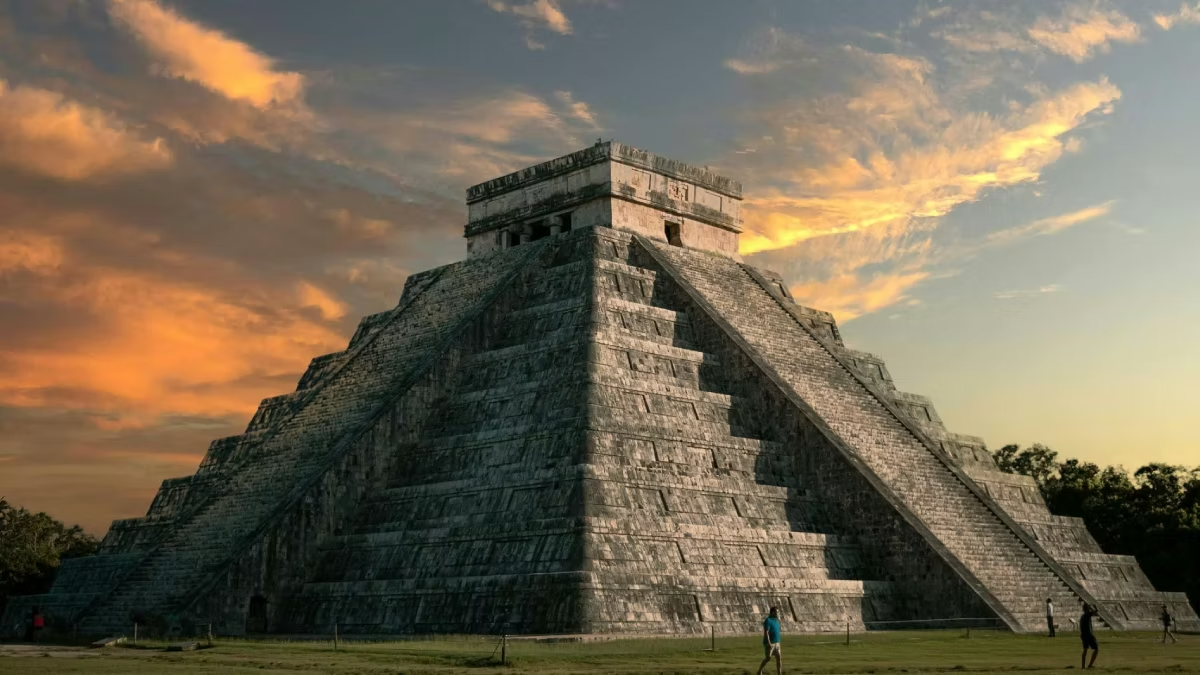
The best time to visit Chichén Itzá is between mid-November and early April, during the dry season, when daytime highs sit at 28–32°C (82–90°F) and rainfall is minimal. Within that window, the best single moment to arrive is 8:00 AM on a weekday — the site opens to few visitors, and tour buses from Cancún and Mérida don’t start arriving until around 10:30 AM. December through March sees the largest international crowds; late November and early February strike the best balance between weather and visitor numbers.
Chichén Itzá sees roughly 2.5 million visitors every year, and how much you enjoy it depends almost entirely on when you go. The site is open 365 days a year, but temperature, rainfall, and crowd density swing dramatically by month, by day of the week, and even by hour. This guide breaks down each variable so you can pick a date and arrival time that suits the kind of visit you want — whether that’s beating the heat, dodging the bus tours, or catching the famous equinox shadow play on El Castillo.
Best Time of Year to Visit Chichén Itzá
The best months are late November, December, early February, March, and April — the dry season, with warm-but-not-sweltering temperatures (28–32°C / 82–90°F), low humidity, and minimal rain. December through March sees the largest international crowds; late November and early February strike the best balance between weather and visitor numbers.
Yucatán has a tropical savanna climate with two sharply defined seasons: a dry season from November to April and a rainy season from May to October. For most travelers, the dry season is the obvious choice — skies are clearer, humidity is lower, and the shaded areas of the archaeological zone actually feel shaded rather than steamy.
Within the dry season, the peak months for international tourism are December through March, driven by North American and European winter holidays. If you want the dry-season weather without the peak-season crowds, aim for mid-to-late November or early-to-mid February (after the post-New Year rush, before Spring Break).
Month-by-Month Breakdown
| Month | Avg High | Rainfall | Crowds | Verdict |
|---|---|---|---|---|
| January | 30°C / 86°F | Very low | Very high | Peak weather, peak crowds |
| February | 32°C / 90°F | Very low | High | Excellent if you arrive at 8 AM |
| March | 33°C / 91°F | Very low | Very high (equinox) | Great weather, equinox crowds Mar 19–21 |
| April | 35°C / 95°F | Low | High | Hot, still dry, Easter spike |
| May | 36°C / 97°F | Rising | Moderate | Very hot, humidity climbing |
| June | 34°C / 93°F | High | Low | Hot and humid, afternoon storms |
| July | 34°C / 93°F | High | Moderate (summer travel) | Rainy but still busy |
| August | 34°C / 93°F | Very high | Moderate | Wettest and most humid |
| September | 32°C / 90°F | Very high | Low | Rainiest month, equinox Sept 22–23 |
| October | 31°C / 88°F | High | Low | Humid, hurricane risk |
| November | 30°C / 86°F | Low | Moderate | Sweet spot: good weather, fewer crowds |
| December | 30°C / 86°F | Very low | Very high | Beautiful weather, holiday crowds |
The Shoulder-Season Sweet Spots
If you want dry weather without fighting 8,000 other visitors, target these windows:
- Mid-to-late November — after hurricane season ends, before US Thanksgiving travel spikes
- Early February — the quiet gap between New Year and Spring Break
- Early May — hot, yes, but far fewer tourists before the summer rush
Best Day of the Week to Visit
Tuesdays, Wednesdays, and Thursdays are the best days to visit Chichén Itzá. Weekends draw both international tourists and Mexican visitors (Sundays are free for Mexican nationals), while Mondays attract travelers on Monday-departure weekend packages. Weekday mid-week visits see noticeably lighter crowds.
Sundays at Chichén Itzá are particularly busy because admission is free for Mexican citizens and foreign residents on that day. The site fills with domestic visitors, and the carparks begin to back up by mid-morning. If you can only go on a weekend, Saturday morning at 8 AM is far better than Sunday at any hour.
Best Time of Day to Visit
Arrive at 8:00 AM, when the site opens. Tour buses from Cancún, Playa del Carmen, and Mérida typically reach the main entrance between 10:30 AM and 11:30 AM, so the first two hours are the quietest. A lesser-known option: many visitors leave by 3 PM to beat afternoon rain or heat, making the 3:30–5:00 PM window surprisingly peaceful too.
There are three distinct visiting periods during the day, and each has its own character:
- 8:00–10:30 AM (Golden window) — Cool morning temperatures (22–27°C / 72–81°F), soft light for photos, and very few other visitors. If you only have time to visit one pyramid-complex in Mexico, spend these hours at El Castillo.
- 10:30 AM–2:30 PM (Peak chaos) — Tour buses arrive in waves, vendors set up along the paths, and temperatures climb past 32°C (90°F). The ball court and surrounding paths get crowded.
- 3:00–5:00 PM (Quiet afternoon) — Day-tripping groups have left to catch cenotes or head back to the coast. The light is warmer, the site is noticeably calmer, and last admission is 4:00 PM sharp.
The 8 AM rule is the single most valuable tip on this page. The difference between arriving at 8:00 AM and arriving at 11:00 AM is not “slightly busier” — it is experiencing the site almost alone versus sharing it with several thousand people. For details on logistics, see our guide on opening hours, entrance gates, and ticket booths.
Equinox: The Serpent Shadow on El Castillo
On the spring equinox (around March 20–21) and autumn equinox (around September 22–23), the late-afternoon sun creates a shadow on the north staircase of El Castillo that resembles a serpent slithering down the pyramid — a phenomenon engineered by the ancient Maya. The effect is visible for about 45 minutes before sunset on the equinox and for 2–3 days on either side.
The serpent shadow is Chichén Itzá’s most famous optical event, and it draws enormous crowds — expect 15,000+ visitors on equinox day. If seeing the shadow is your primary reason for visiting, consider going on March 22 or September 24, the day after peak equinox: the effect is still clearly visible, but attendance drops by more than half.
We cover this in detail in our dedicated guide to the spring and autumn equinox serpent shadow.
What About the Rainy Season?
The rainy season (May–October) gets an unfairly bad reputation. Most days don’t see all-day rain — they see a short, heavy burst between 2 PM and 5 PM that cools everything down. If you’re at the site early and plan to leave by 2 PM anyway, rainy season actually has some advantages:
- 30–50% fewer visitors than dry season
- Lower tour prices and easier booking
- Lush green vegetation surrounding the ruins
- Cenotes are at their most spectacular water levels
The real risks are September and October, which are the wettest months and overlap with Atlantic hurricane season. If you’re visiting then, book refundable tours and watch tropical storm forecasts for the Yucatán Peninsula.
Worst Times to Visit
Some dates are genuinely best avoided unless you’re prepared for crowds and heat:
- December 20 – January 5 — Christmas and New Year holiday peak; hotels 200–300% above normal rates
- Holy Week (Semana Santa) — The week before Easter; Mexican domestic tourism peaks
- March 19–21 — Spring equinox crowds
- September 22–23 — Autumn equinox crowds
- Sundays — Free admission for Mexican nationals creates weekend congestion
- May midday — The hottest month; arriving at noon in 37°C (98°F) heat is genuinely unpleasant
Our Recommendation
If you’re planning fresh and have flexibility, target a weekday in mid-November or early February and arrive at 8 AM. You’ll get dry weather, bearable temperatures, thin crowds, and the best light on El Castillo you’re likely to see. Build a day around it with an early start — a Chichén Itzá, Cenote & Valladolid tour with lunch is the most popular combination because it hits the ruins early and the cenote swim during the hottest part of the day.
If you’re debating whether the trip is worth it at all given crowds or logistics, our Is Chichén Itzá Worth It? guide walks through the honest pros and cons.
Frequently Asked Questions
What is the absolute best month to visit Chichén Itzá?
November is the best overall month. Hurricane season has ended, daytime highs sit around 30°C (86°F), rainfall is minimal, and international winter-holiday crowds haven’t arrived yet. Early February is the close runner-up for the same reasons without the post-Thanksgiving build-up.
Is Chichén Itzá too hot to visit in summer?
Summer (June–August) is uncomfortable but not prohibitive if you visit at 8 AM and leave by noon. Temperatures climb past 34°C (93°F) with high humidity from midday. Most summer visitors pair the ruins with a cenote swim afterward to cool off.
How early should I arrive at Chichén Itzá?
Arrive at 7:45 AM to be in the first wave of visitors when gates open at 8:00 AM. This gives you roughly two hours of near-empty site before tour buses from Cancún and Mérida arrive around 10:30 AM.
Is Chichén Itzá crowded on Sundays?
Yes — Sundays are the busiest day of the week. Admission is free for Mexican citizens and foreign residents, which fills the site with domestic visitors from mid-morning onward. If you can only visit on a weekend, Saturday at opening is far better.
Can I visit Chichén Itzá during the rainy season?
Yes, and it has advantages. Rainy season (May–October) typically means short afternoon storms between 2–5 PM, not all-day rain. You’ll find 30–50% fewer visitors, lower tour prices, and spectacular cenote water levels. Avoid September–October if possible due to peak hurricane risk.
Do I need to book Chichén Itzá months in advance?
Not for standard entry — tickets are available daily. But for the equinox dates (March 19–21 and September 22–23) or any visit during Christmas, New Year, or Semana Santa, book tours and hotels 3–6 months ahead. Standard dry-season weekdays need only a few days’ notice.
What time does Chichén Itzá close?
The site closes at 5:00 PM daily, with last admission at 4:00 PM. Security begins clearing visitors from the far end of the site around 4:45 PM. The Noches de Kukulkán evening light show runs separately from around 7:00 PM.
