

Spring & Autumn Equinox: The Serpent Shadow
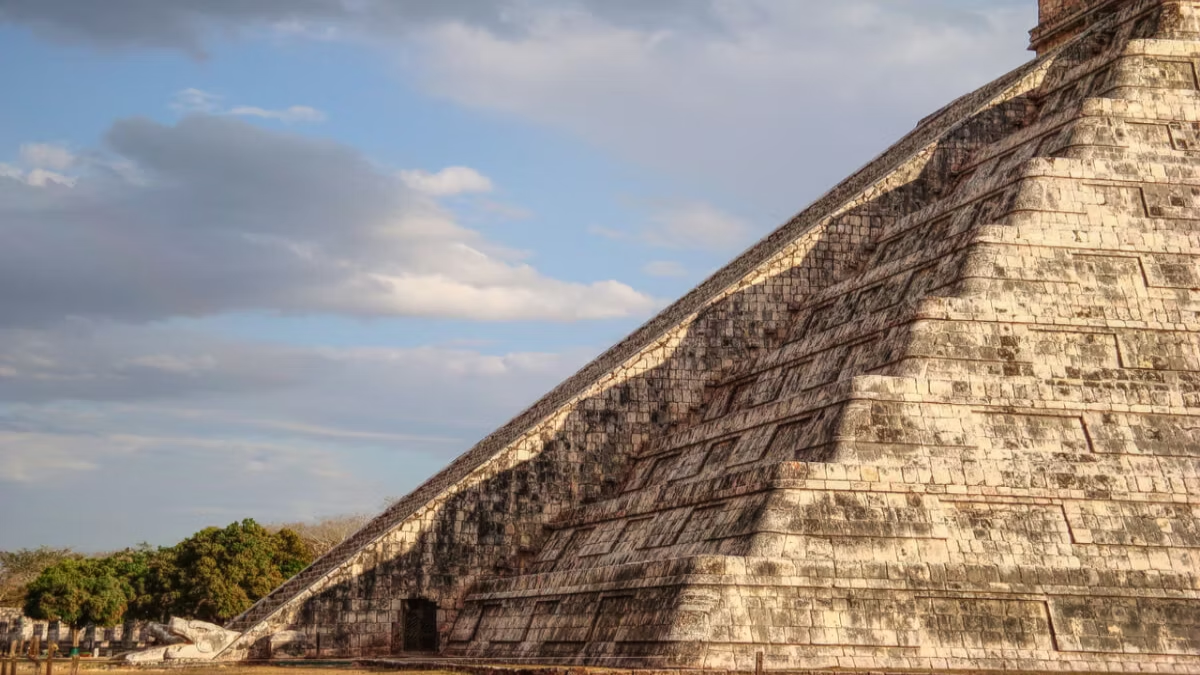
Twice a year, on the spring equinox (around March 20–21) and the autumn equinox (around September 22–23), the late-afternoon sun casts a shadow on the north staircase of El Castillo that resembles a feathered serpent — Kukulkán — slithering down the pyramid. The effect appears as seven triangular shadows forming the serpent’s body, connecting to the carved stone serpent head at the base of the stairs. It’s visible between roughly 3:00 PM and 5:10 PM, with the strongest illusion between 4:30 and 5:10 PM. The phenomenon lasts about 30 minutes at peak and draws over 8,000 visitors on peak equinox day. The shadow effect is visible for several days before and after the official equinox — visiting on the day before or after cuts the crowds in half while preserving the experience.
The Chichén Itzá equinox is the single most famous astronomical spectacle at any Mayan site. It’s not a trick or a coincidence — the ancient Maya engineered El Castillo so precisely that on the twice-yearly equinoxes, the geometry of the sun, the pyramid’s nine stepped platforms, and the carved serpent heads at the base combine to create the illusion of Kukulkán, the feathered serpent deity, descending the staircase. This guide covers the exact timing, the science behind it, how to plan your visit around the equinox crowds, and the strategy experienced travelers use to see the shadow without fighting 15,000 other people.
What Is the Chichén Itzá Equinox Phenomenon?
The equinox phenomenon at Chichén Itzá is a light-and-shadow effect on the north staircase of El Castillo (the Temple of Kukulkán) that appears twice a year around March 20–21 and September 22–23. As the sun sets, the stepped platforms of the pyramid’s northwest corner cast seven triangular shadows onto the balustrade of the north staircase. These triangles line up perfectly with a large stone serpent head carved at the base, producing the vivid illusion of a snake’s body descending the pyramid toward the ground.
The effect is a genuine feat of ancient astronomy and architecture. El Castillo has four staircases, one on each side, and 91 steps per staircase plus a single top platform — totaling 365, one for each day of the solar year. The pyramid’s axis is oriented precisely so that on the equinoxes, the setting sun’s angle combined with the stepped geometry creates the serpent silhouette. The Maya understood earth’s orbital mechanics precisely enough to bake this into a stone structure — without metal tools, without a wheel, and without a European-style written number system.
What You’ll Actually See
- Seven triangular shadow shapes along the western balustrade of the north staircase
- The carved stone serpent head at the base of the north staircase, clearly lit
- A gradual, undulating descent as the sun moves — the “body” appears to slither
- The full effect lasts about 30 minutes at its clearest
The shadow doesn’t cover the full staircase — it forms on the balustrade (the sloped side-wall), connecting visually to the serpent head carving to create the illusion.
When Exactly Does the Equinox Happen?
The 2026 spring equinox falls on March 20 astronomically, with the serpent shadow visible on March 20 and 21 (and 2–3 days on either side). The autumn equinox is on September 22, with the effect visible on September 22 and 23 (and 2–3 days on either side). The shadow appears between roughly 3:00 PM and 5:10 PM each day, peaking around 4:30–5:00 PM when the sun hits the optimal angle.
2026 Equinox Dates at Chichén Itzá
| Equinox | Official Date | Peak Viewing Days | Best Viewing Time |
|---|---|---|---|
| Spring | March 20, 2026 | March 20 & 21 | 4:30–5:00 PM |
| Autumn | September 22, 2026 | September 22 & 23 | 4:30–5:00 PM |
The Shadow Is Visible for Longer Than One Day
This is the single most important thing experienced visitors know: the serpent effect is visible for about a week on either side of the exact equinox date. The illusion is strongest on the astronomical equinox itself, but on the days surrounding it, the shadow still forms clearly — the triangles just shift slightly in their alignment. Going on March 18 or March 22 (or September 20 or September 24) cuts the crowds dramatically while preserving most of the visual spectacle.
According to the INAH’s Yucatán delegation, the effect is “approximately visible” from around March 1 through April 8 and from about September 1 through October 15, though the number of clear triangles varies. The closer to the official equinox, the cleaner the effect.
Why the Maya Built It This Way
The Maya were extraordinary astronomers. Their calendar system tracked solar, lunar, and Venusian cycles with high precision, and Kukulkán — a feathered serpent deity associated with the sky, rain, and fertility — was central to their religion. Building a pyramid whose architecture summons Kukulkán’s image from sunlight twice a year served several purposes at once:
- Marking the agricultural calendar — the equinoxes signaled planting and harvest seasons
- Demonstrating priestly knowledge — the spectacle reinforced the elite’s authority
- Religious gathering — the appearance of the god drew worshippers from across the peninsula
- Uniting Toltec-Maya theology — Kukulkán (Maya) is the same deity as Quetzalcoatl (Toltec), and the pyramid’s alignment bridges both traditions
Seen that way, El Castillo isn’t just a pyramid — it’s a calendar, a stage, and a political statement built in stone.
How Crowded Does It Actually Get?
Peak equinox day at Chichén Itzá typically draws 8,000 to 15,000+ visitors, compared to the usual daily average of around 3,000–5,000. The site feels crowded but doesn’t sell out — INAH keeps the gates open for the expected volume. However, the area directly in front of El Castillo’s north staircase gets packed from about 3:00 PM onward, and prime viewing spots require arriving early to secure.
On the peak day, expect:
- Parking lot full by 9 AM, with overflow lots filling through midday
- Main plaza noticeably busy by 11 AM, with a visible mood of anticipation from early afternoon
- Massive crowd at the north face of El Castillo from 2:30 PM onward
- Vendors and food stalls in heavier numbers than on a regular day
The upside: the site is 4 square miles, so even with 10,000 visitors, you’re not packed cheek-to-jowl outside the main plaza. Seeing the shadow well does require being near the north staircase at the right time, though.
Our Equinox Viewing Strategy
The best equinox strategy is to visit on the day before or after peak equinox, when the shadow is still clearly visible but crowd numbers drop by 40–60%. Arrive at 8:00 AM opening to see the rest of the site in the cool morning, rest during the hot midday (at a nearby cenote or back at your hotel), then return to the pyramid at 2:00–2:30 PM to claim a viewing spot on the grassy area northwest of El Castillo. The shadow appears from about 3:00 PM, peaks at 4:30–5:00 PM, and the site closes at 5:00 PM.
The Full-Day Equinox Plan
- 6:30–7:00 AM: Depart your hotel (Valladolid base recommended — the Cancún drive is 3 hours)
- 7:50 AM: Arrive at the parking lot
- 8:00–10:30 AM: Tour the site (El Castillo, Ball Court, Temple of Warriors, Sacred Cenote, El Caracol)
- 10:30 AM–1:30 PM: Break for lunch and a cenote swim (Ik Kil is 10 minutes away)
- 2:00 PM: Return to Chichén Itzá for the afternoon
- 2:30 PM: Secure a viewing position on the grassy lawn northwest of El Castillo — you want to face the western balustrade of the north staircase
- 3:00 PM: Shadow begins to form
- 4:30–5:00 PM: Peak of the phenomenon
- 5:00 PM: Site closes; gates direct visitors out
Why the Day Before or After Matters
Crowd data from recent years shows:
- Peak equinox day: 8,000–15,000 visitors
- Day before or after: 5,000–8,000 visitors
- Three days before/after: 4,000–5,000 visitors
The shadow on these adjacent days is 90–95% as clear. For most visitors, the trade-off is worth it.
What to Wear and Bring for the Equinox Visit
A full equinox-day visit is significantly longer than a typical visit — 6 to 8 hours on-site, not counting travel. Plan accordingly:
- Wide-brimmed hat and sunglasses — you’ll be standing or sitting in the sun for 2+ hours in the afternoon
- Sunscreen (SPF 50+) — reapply before the 2:30 PM return to the site
- 3 liters of water per person — it’s a long day, and there’s no water inside the zone
- Light, breathable clothing — many visitors wear white for the equinox, following Maya tradition (white symbolizes renewal and spiritual connection)
- A light jacket for the late afternoon — the temperature drops once the sun lowers
- Insect repellent — mosquitoes appear in late afternoon, especially in shaded jungle areas
- Portable phone charger and snacks — it’s a marathon day
For the broader packing list and site rules, see our things to know before visiting Chichén Itzá.
Where to Stay for an Equinox Visit
Accommodation near Chichén Itzá books out 2–6 months in advance for equinox dates, particularly for the on-site haciendas and the better Valladolid hotels. If you want to attend the 2026 equinox, book now.
- Valladolid (40 minutes away) — best all-around base
- Pisté (5 minutes away) — cheapest, simplest
- The on-site haciendas (Mayaland, The Lodge, Hacienda Chichén) — most convenient; use their private entrance to arrive early
For full details see our where to stay near Chichén Itzá guide.
What If It’s Cloudy?
The serpent shadow requires direct, unobstructed sunlight. On a fully cloudy afternoon, the effect won’t be visible. This is the single biggest risk of an equinox visit — you can’t control the weather.
Historical cloud probability for equinox afternoons:
- March 20–21: Usually dry and clear (end of dry season) — clear viewing probability ~85%
- September 22–23: Rainy season — clear viewing probability ~55–65%
If you’re traveling specifically for the effect, the spring equinox offers significantly better odds than the autumn one.
Some tour operators offer refunds or reschedules for weather-related no-shows; most do not. Book refundable tour options where possible if the equinox is your primary goal.
Equinox Viewing Etiquette and Rules
- You cannot climb El Castillo at any time, including the equinox — barriers surround the pyramid
- Stay behind the rope lines — site security actively patrols
- No drones — especially enforced on equinox days
- Tripods require prior INAH permission
- No flash photography is needed (the light is strong enough until the shadow forms)
- Be respectful of visitors who attend for spiritual reasons — many consider the equinox a sacred event
Alternative Equinox Experiences Nearby
If Chichén Itzá is fully booked or you want a quieter equinox, the Yucatán has other archaeological sites with equinox phenomena:
- Dzibilchaltún (near Mérida) — the sun rises through the main doorway of the Temple of the Seven Dolls at dawn on the equinox
- Oxkintok (near Mérida) — a sunrise alignment at the Arch of Oxkintok
- Mayapán — smaller, quieter, with subtler equinox alignments
Pairing a sunrise at Dzibilchaltún with a sunset at Chichén Itzá is a classic Yucatán equinox day for archaeology enthusiasts.
Frequently Asked Questions
What date is the Chichén Itzá equinox 2026?
The spring equinox in 2026 is on March 20, with the serpent shadow visible on March 20 and 21 (and 2–3 days on either side). The autumn equinox is on September 22, with the effect visible on September 22 and 23 (and 2–3 days on either side).
What time does the serpent shadow appear?
The shadow forms gradually from around 3:00 PM and reaches its clearest, most serpent-like form between 4:30 PM and 5:10 PM. The site closes at 5:00 PM, so the final minutes before closing are when the effect is strongest.
Do I need a special ticket for the equinox?
No. The equinox is included in standard Chichén Itzá admission — around 692 MXN (~$40 USD) for foreign adults in 2026. There is no separate equinox ticket. Buying online in advance is strongly recommended to skip the long queues that form on peak equinox days.
How early should I arrive for the equinox?
If you want a prime viewing position, arrive at 8:00 AM opening, tour the rest of the site in the morning, break during the midday heat, and return to claim a spot on the lawn northwest of El Castillo by 2:30 PM. If you’re only coming for the afternoon, arrive by 1:30 PM to get inside and position yourself before crowds peak.
Can I see the equinox on a day other than the 20th or 21st?
Yes. The shadow is visible for about a week on either side of the official equinox, with the clearest effect on the equinox itself and the two days either side. Visiting on March 19 or March 22 (or September 21 or September 24) gives you almost the same spectacle with roughly half the crowds.
Is the equinox worth planning a whole trip around?
For serious history enthusiasts, photographers, and anyone interested in Maya astronomy, yes — it’s one of the great “you had to be there” experiences in archaeology. For casual travelers who simply want to see the site, a regular weekday visit is more enjoyable because of the drastically thinner crowds.
Will I see the shadow if it’s cloudy?
No — the effect requires direct sunlight. Cloud cover during the crucial 3:00–5:00 PM window means no serpent. Spring equinox afternoons are usually clear (~85% probability), autumn equinox afternoons less so (~55–65%) due to rainy season.
Where is the best spot to see the serpent shadow?
Stand or sit on the grassy lawn northwest of El Castillo, facing the western balustrade of the north staircase. This is where the seven triangular shadows form. Security will direct crowds away from certain angles close to the base of the pyramid.
Can I take photos of the equinox?
Yes — personal photography is free and encouraged. Use a phone or regular camera. Tripods require prior INAH permission, and drones are banned. The best photo angle is from the northwest, with the afternoon sun lighting the balustrade and the serpent head.
